Wellness
Wellness has evolved far beyond conventional approaches to health, embracing a more integrated understanding of how cosmic rhythms, energetic systems, and psychological patterns shape our daily experience. When astrology intersects with wellness practices, it offers a personalized roadmap for understanding your unique needs—revealing why you might feel energized during certain moon phases, where emotional blockages originate in your birth chart, or how planetary transits influence your sleep quality and stress response.
This holistic framework doesn’t replace medical care or therapy; rather, it complements these practices by helping you recognize patterns, time your self-care rituals strategically, and address wellness from multiple dimensions simultaneously. Whether you’re drawn to shadow work for psychological healing, somatic practices for releasing trauma, or crystal programming for energetic protection, astrology provides the timing, context, and diagnostic insight to make these modalities more effective. The following sections explore how to integrate these approaches into a coherent wellness practice that honors both your cosmic blueprint and your lived experience.
How Does Astrology Support Deep Psychological Work?
Your birth chart functions as an archetypal map of your psyche, revealing not just your conscious personality but also the shadow aspects you’ve repressed or denied. The twelfth house, Pluto’s placement, and challenging aspects between planets often point directly to where your psyche has hidden painful material—childhood wounds, inherited family patterns, or socially unacceptable desires that got pushed into the unconscious.
Locating Your Repressed Self Through the Chart
Certain astrological signatures consistently correlate with specific psychological defenses. A heavily aspected Saturn might indicate where you learned to suppress spontaneity or play; Chiron’s placement often marks your core wound and subsequent healing journey; intercepted signs can reveal parts of yourself that never received permission to develop. By examining these markers, you gain concrete starting points for dialogue with the self—asking what these planetary energies need to express rather than suppress.
Differentiating Projection From Authentic Perception
One of astrology’s most practical applications in therapy involves understanding projection mechanisms. The seventh house, for instance, represents both partnership and what you project onto others. If your natal Mars resides there unintegrated, you might consistently attract “angry” partners—when in reality, you’re encountering your own unexpressed assertion. Learning to recognize these patterns prevents years of blaming external circumstances for internal dynamics.
Avoiding Spiritual Bypassing in Astrological Practice
A critical caution: astrology can become a sophisticated form of spiritual bypassing if used to avoid genuine emotional processing. Statements like “Mercury retrograde made me say that” or “It’s just my Scorpio moon” excuse behavior rather than examining it. Effective astrological therapy uses planetary placements as conversation starters, not explanations that close inquiry. The goal is integration—bringing unconscious patterns into awareness where choice becomes possible.
Syncing Your Emotional Regulation With Cosmic Cycles
Your emotional body doesn’t exist in isolation—it responds constantly to gravitational pulls, electromagnetic fluctuations, and rhythmic patterns that extend beyond personal psychology into biological astrology. Research on circadian biology, seasonal affective patterns, and lunar influences on sleep and mood validates what traditional astrology has long claimed: we are rhythmic beings embedded in larger cycles.
Working With Lunar Phases for Self-Care
The moon’s twenty-nine-day cycle offers a practical framework for emotional regulation. The waxing phase (new to full moon) typically supports initiative, social engagement, and outward action, while the waning phase (full to new moon) favors introspection, completion, and release. Tracking your personal responses to these phases—especially how they interact with your natal moon sign and house placement—reveals your unique lunar self-care rhythm. Someone with a Capricorn moon might find the third-quarter phase ideal for practical boundary-setting, while a Pisces moon might need extra grounding during the emotionally permeable full moon.
Element-Based Coping Mechanisms
Your chart’s elemental distribution (fire, earth, air, water) predicts which stress-reduction techniques will feel most natural and effective. Fire-dominant individuals often regulate through physical movement and creative expression; earth types through sensory grounding and routine; air signs through journaling and conversation; water signs through emotional release and artistic immersion. Recognizing your elemental makeup prevents the frustration of forcing incompatible wellness practices.
Preventing Energetic Burnout and Optimizing Sleep
Certain transits—particularly Mars and Uranus activations—can create energetic burnout if you’re unaware of their stimulating effects. Similarly, Neptune and Pisces transits to your moon or twelfth house might disrupt sleep hygiene by thinning boundaries between waking and dreaming states. Tracking these patterns allows you to preemptively adjust caffeine intake, screen time, and sleep environments during vulnerable periods rather than wondering why your usual routine suddenly fails.
Integrating Somatic Practices for Trauma Release
The body stores what the mind cannot process. Traumatic experiences, especially pre-verbal or shock-based ones, embed themselves in fascia, musculature, and nervous system responses—often bypassing conscious memory entirely. Astrology’s contribution here involves identifying where body-mind disconnection originates and which somatic modalities might address your specific configuration.
Sixth house placements and aspects to Mars often indicate how trauma manifests physically—chronic tension patterns, autoimmune responses, or specific body areas holding stuck energy. Someone with Saturn in the sixth house might carry trauma as muscular rigidity and chronic pain, responding well to structural bodywork. Uranus there might manifest as nervous system dysregulation, benefiting from practices that rebuild vagal tone like breathwork or cold exposure.
Understanding the Healing Crisis vs. Authentic Progress
Somatic release can trigger what practitioners call a “healing crisis”—temporary intensification of symptoms as the body processes stored material. Astrologically, these often coincide with challenging transits to natal Chiron or the sixth house. Understanding this correlation prevents panic when symptoms worsen temporarily before improving. The key distinction: a healing crisis passes within days and brings new awareness, whereas deterioration from inappropriate treatment persists and brings only confusion. Your recovery window also follows predictable patterns—waxing moons typically accelerate healing, while Saturn transits might slow but deepen integration.
Targeting Blockages Through the Chakra System
The seven-chakra system maps remarkably well onto astrological houses and planetary principles, offering a practical diagnostic framework for identifying where life force gets stuck. Each chakra governs specific life areas—survival, sexuality, personal power, love, communication, intuition, spiritual connection—that correspond to particular astrological domains.
- Root chakra (survival, security): correlates with Saturn, Capricorn, and the second/fourth houses
- Sacral chakra (creativity, sexuality): corresponds to Mars, Venus, the fifth and eighth houses
- Solar plexus (personal power): connects to Sun, Leo, and the tenth house
- Heart chakra (love, connection): relates to Venus, Libra, and the seventh house
- Throat chakra (communication): aligns with Mercury, Gemini, and the third house
- Third eye (intuition): corresponds to Neptune, Pisces, and the ninth/twelfth houses
- Crown chakra (spiritual connection): connects to Uranus, Jupiter, and the eleventh house
Diagnosing and Regulating Specific Blockages
When a particular life area repeatedly malfunctions—chronic financial instability, relationship patterns, communication breakdowns—examining both the relevant chakra and corresponding astrological houses often reveals the underlying energetic blockage. A challenged second house with restrictive Saturn aspects might manifest as both root chakra deficiency and material scarcity. The self-regulation methodology then involves working simultaneously on practical financial skills (Saturn’s domain) and somatic grounding practices (root chakra activation) rather than addressing only one level.
Balancing Upper and Lower Chakras
Many spiritual practitioners unintentionally create imbalance by focusing exclusively on upper chakras (third eye, crown) while neglecting lower ones (root, sacral, solar plexus). Astrologically, this often appears as overemphasis on outer planets (Uranus, Neptune, Pluto) with underdeveloped personal planets (Sun, Moon, Mars, Venus). The result: profound spiritual insights accompanied by inability to pay bills, maintain relationships, or assert boundaries. Effective daily flow requires circulating energy through all centers, ensuring transcendent experiences stay connected to embodied reality.
Using Planetary Timing for Meditation Practice
Not all meditation sessions carry equal potential. The planetary day and hour, current moon phase, and active transits dramatically influence which practices produce results versus frustration. Astrology-guided meditation treats contemplative practice as active mental training—deliberately invoking specific planetary energies to develop corresponding psychological capacities.
Planetary Invocation and Active Visualization
Each planet governs particular mental faculties and states of consciousness. Solar meditations (performed on Sundays or during the hour of the Sun) strengthen identity, purpose, and vitality; lunar practices enhance receptivity and emotional intelligence; Mercury sharpens focus and analytical clarity; Venus opens aesthetic appreciation and relational warmth; Mars builds willpower and directed action. Active visualization during these periods—imagining planetary qualities infusing your energy field—functions as targeted psychological development rather than passive relaxation.
Comparing Contemplative Styles by Element and Modality
Your natal chart suggests which meditation styles will feel natural versus require more discipline to develop. Cardinal sign emphasis often prefers dynamic practices like walking meditation or breathwork; fixed signs excel at sustained single-pointed concentration; mutable signs benefit from varied techniques that prevent boredom. Fire signs might naturally gravitate toward kundalini or vigorous pranayama; earth signs toward body scans and sensory awareness; air signs toward witnessing thoughts without attachment; water signs toward visualization and heart-opening practices.
Avoiding Escapism and Optimizing Practice Timing
The shadow side of meditative practice appears when it becomes spiritual escapism—avoiding life responsibilities through endless sitting. Neptune’s challenging aspects often correlate with this tendency, as do twelfth house stelliums ungrounded by earth placements. The antidote involves timing practice strategically: using morning sessions to prepare for engaged action rather than retreat from it, and ensuring meditation supports worldly effectiveness rather than replaces it. Practicing during Jupiter or Sun hours tends toward empowerment, while excessive Neptune-hour meditation can increase dissociation.
Programming Crystals for Modern Energetic Challenges
Contemporary life presents stressors unprecedented in human history—electromagnetic radiation, constant digital stimulation, environmental toxins, collective anxiety amplified through technology. Crystals and stones, when properly programmed and maintained, can function as energetic filters and amplifiers, helping your field maintain coherence amid chaos.
Understanding Stone Properties Through Planetary Rulership
Different stones resonate with specific planetary frequencies, making them useful for particular applications. Hematite and obsidian (Saturn-ruled) excel at grounding and protection; rose quartz and emerald (Venus) support heart-opening and relationship healing; citrine and tiger’s eye (Sun) boost confidence and vitality; moonstone and pearl (Moon) enhance intuition and emotional balance. Selecting stones based on current transits or natal chart needs—rather than generic recommendations—dramatically increases their effectiveness.
Programming Methodology and Cleansing Routines
A common mistake involves collecting stones without programming them for specific intentions or maintaining their energetic clarity. Programming requires three steps: cleansing the stone of previous energies (using salt water, sound, or moonlight), setting clear intention while holding the stone during a relevant planetary hour, and regular recharging through exposure to corresponding planetary energies. A protection stone programmed during a Mars hour in waxing moon carries different qualities than one set during waning moon in a Venus hour.
Avoiding Energetic Clutter in Your Space
More stones don’t equal better results—they can create competing frequencies and energetic clutter if accumulated without purpose. Each major life area benefits from one or two specifically chosen and maintained stones rather than dozens of random specimens. Your bedroom might hold a single moonstone for sleep quality; your workspace a clear quartz programmed for mental clarity; your meditation area a stone corresponding to your current spiritual focus. Rotating stones seasonally or according to major transits keeps your collection active rather than stagnant.
Integrating these diverse wellness modalities under astrology’s unifying framework transforms self-care from a collection of isolated practices into a coherent system responsive to your unique design and the cosmic moment. The key lies not in perfecting every technique, but in developing the self-awareness to recognize which tools serve your evolution now—and the wisdom to know when that changes.
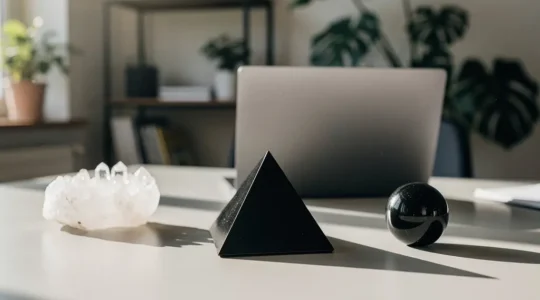
Crystals for the Digital Age: Protecting Your Energy From EMF and Screen Fatigue
In summary: Effective energetic protection is a strategic system, not random decoration. It involves using specific crystals for their verifiable properties. Shungite is scientifically noted for its unique carbon structure (fullerenes) that interacts with EMFs, making it a cornerstone for…
Read more
Astrology-Guided Meditation: Visualizing Your Transits to Program Your Mind
Contrary to popular belief, the goal of meditation isn’t to silence your mind—it’s to give it a precise job. For active minds (like Gemini and Aquarius), structured visualization provides the necessary “neurological scaffolding” that silent meditation lacks. Treating planetary archetypes…
Read more
Chakra Balancing for Real Life: Fixing Communication Issues via the Throat Chakra
Recurring communication issues at work are rarely just a “throat chakra problem”; they are symptoms of a systemic imbalance within your energetic anatomy. A weak voice before a presentation often points to an under-active Solar Plexus (your power center), not…
Read more
Somatic Energy Healing: Releasing Trauma Stored in the Body Beyond Talk Therapy
Chronic pain and fatigue often stem from trauma physically stored in the body’s tissues, a level that talk therapy alone cannot reach. Somatic energy healing offers a body-first approach, not by manipulating mystical forces, but by helping your nervous system…
Read more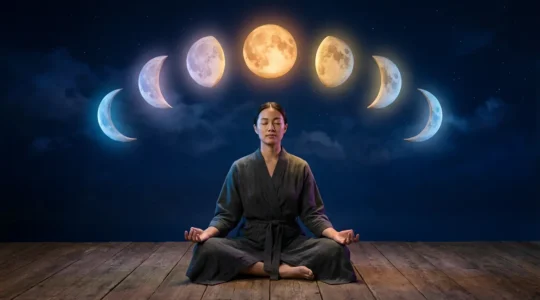
Syncing With the Moon: Your 28-Day Guide to Mastering Emotional Peaks and Valleys
In summary: Your emotional state isn’t random; it’s often linked to the lunar cycle’s distinct energetic phases. Effective self-care isn’t about following a rigid script but about diagnosing your energy (depleted, stagnant, or overstimulated) and choosing a matching ritual. The…
Read more
Astrology as a Mirror: Using Your Chart to Identify Subconscious Shadow Patterns
Astrology’s greatest power isn’t prediction, but its function as a precise diagnostic tool for your inner psychological architecture. Your natal chart maps specific, recurring patterns of emotional repression (12th House), relational projection (7th House), and karmic comfort zones (South Node)….
Read more