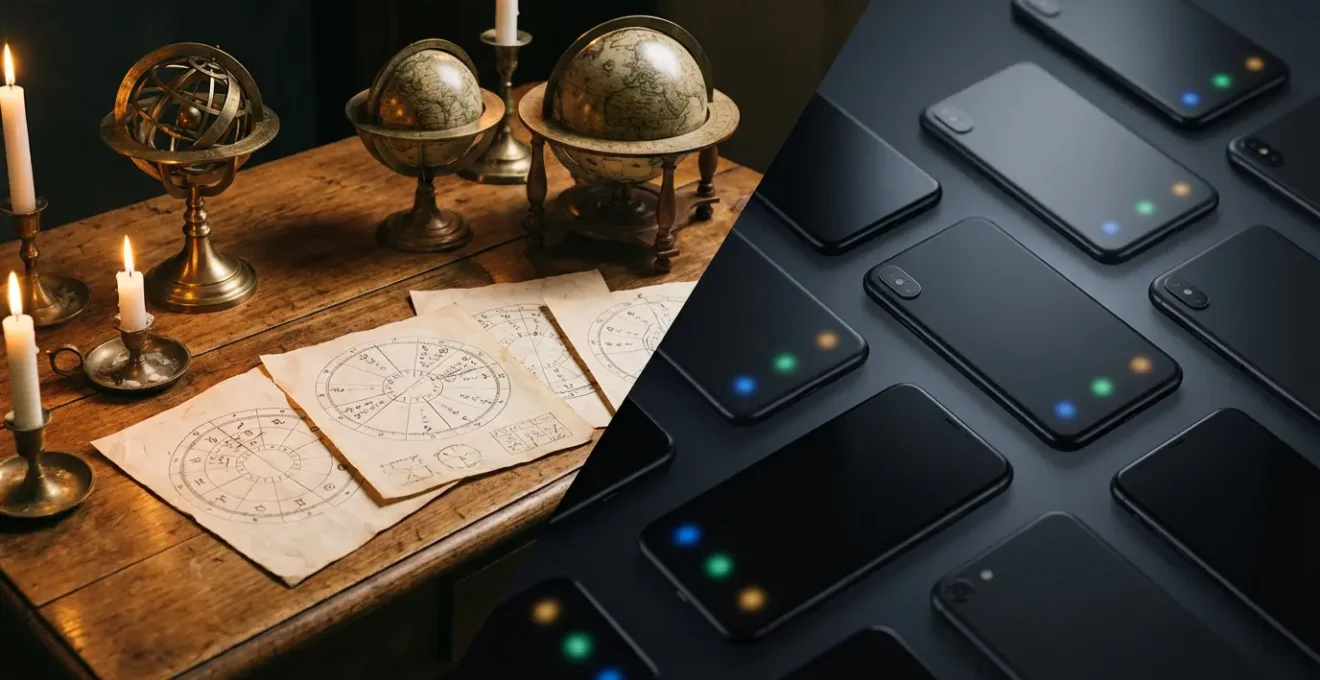
Your daily horoscope app is likely giving you simplified, mass-market advice, not a precise forecast. The key is understanding that astrology operates on a data hierarchy, and most apps intentionally use low-resolution data for business reasons.
- Generic horoscopes are based only on your Sun sign, ignoring the far more crucial Rising sign and house structure which require your exact birth time.
- Actionable predictions come from tracking specific planetary transits (like Mars or the Moon) through your unique astrological houses, not from vague “you will feel…” statements.
Recommendation: Stop passively consuming generic horoscopes and start actively analyzing high-resolution data like planetary transits through an ephemeris to make strategic decisions.
You check your phone and your favorite astrology app sends a notification: “A challenging day ahead! Be wary of conflicts.” An hour later, another app pings: “Great day for new connections! Be bold.” You’re left confused, and rightly so. This conflict isn’t a sign of astrology’s failure; it’s a symptom of a fundamental misunderstanding promoted by the very tools designed to clarify. Most users treat these daily alerts as personal, precise forecasts, when in reality, they are often the astrological equivalent of a weather report for an entire continent.
The common wisdom is that horoscopes are generic and “for fun,” while “real” astrology requires a deep, complex analysis of your birth chart. While true, this simple dichotomy misses the crucial point. The difference isn’t just about fun versus serious; it’s about the resolution and quality of the data being used. Generic app horoscopes are intentionally simplified for mass-market appeal and user acquisition, often relying on a system that ignores the most critical piece of data: your precise birth time. They are designed to be relatable, not accurate.
But what if the key to unlocking astrology’s predictive power wasn’t about finding the “right” app, but about changing your perspective entirely? What if you approached your astrological data not as a series of mystical prophecies, but as a set of key performance indicators (KPIs) to be analyzed? This article will deconstruct the technical and business reasons behind misleading app notifications. We will explore how to shift from a passive consumer of generic advice to an active analyst of your own astrological data, learning to distinguish the signal from the noise and use planetary transits for genuine, strategic planning.
This guide provides a clear framework for understanding the data hierarchy in astrology. We’ll examine why apps make certain choices, how to track key transits yourself, and how to identify forecasts you can actually trust.
Summary: Transits vs. Horoscopes: A Data-Driven Guide
- Why Most Apps Use “Sun Sign Houses” Instead of Your Actual Rising Sign?
- How to Track Mars Transits Through Your Specific House System for Accuracy?
- Ephemeris vs. App Algorithm: Which Is Better for Planning Your Week?
- The Overreaction Trap: Freaking Out Over a Moon-Pluto Opposition That Lasts 4 Hours
- How to Use the Hourly Movement of the Moon to Schedule Tasks Efficiently?
- AI Algorithms vs. Human Astrologers: Who Predicts Career Shifts Better?
- How to Track the Moon’s Void-of-Course Phases to Avoid Useless Meetings?
- Identifying Reliable Forecasts: 3 Red Flags in Generic Astrology Reports
Why Most Apps Use “Sun Sign Houses” Instead of Your Actual Rising Sign?
The primary reason your daily horoscope feels generic is that it’s almost certainly not based on your personal chart. Most apps use a “Sun Sign House” system, which pretends that everyone born under a certain sign (e.g., all Leos) was born at sunrise. This places their Sun in the 1st house and lays out the other houses from there. This is a massive simplification, as your true astrological houses—the 12 sectors of your life—are determined by your Ascendant or Rising Sign, which requires your exact time of birth.
This isn’t an astrological oversight; it’s a calculated business decision. Forcing users to enter a precise birth time creates what developers call onboarding friction. Many people don’t know their exact birth time, and asking for it would significantly reduce sign-ups. By only requiring a birthdate, apps can maximize user acquisition and then build a sales funnel. They offer free, generic Sun sign content to draw you in, creating a natural path to upsell you on premium reports that *do* use your actual Rising sign and a real house system like Placidus or Whole Sign.
This approach simplifies development immensely, relying on just 12 basic templates instead of complex calculations for every user. As the Astrology App Testing Review states, this choice has a clear consequence for the user. In their 2026 report, they made a stark recommendation:
If an astrology app doesn’t ask for exact birth time, close it. No birth time = no real prediction
– Astrology App Testing Review, RadhaJap Testing Report 2026
Ultimately, Sun Sign horoscopes leverage user familiarity with magazine astrology to create an instant connection with minimal effort from both the user and the developer. It’s a successful business model, but a flawed predictive one.
How to Track Mars Transits Through Your Specific House System for Accuracy?
To move beyond generic horoscopes, you must start tracking transits through your own, unique house system. A transit occurs when a moving planet forms an aspect to a planet in your birth chart or moves through one of your astrological houses. Instead of trying to track every minor event, a data analyst’s approach would be to focus on a key “activator” planet. Mars is a perfect candidate: its transits are frequent enough to be relevant (it changes houses every 6-8 weeks) but slow enough to be trackable and produce tangible results.
This macro-level view of Mars’ movement provides a powerful framework for strategic action. The house Mars is currently transiting in your chart highlights the area of your life that is being energized, activated, and potentially confronted. This is where you should focus your energy for proactive change.
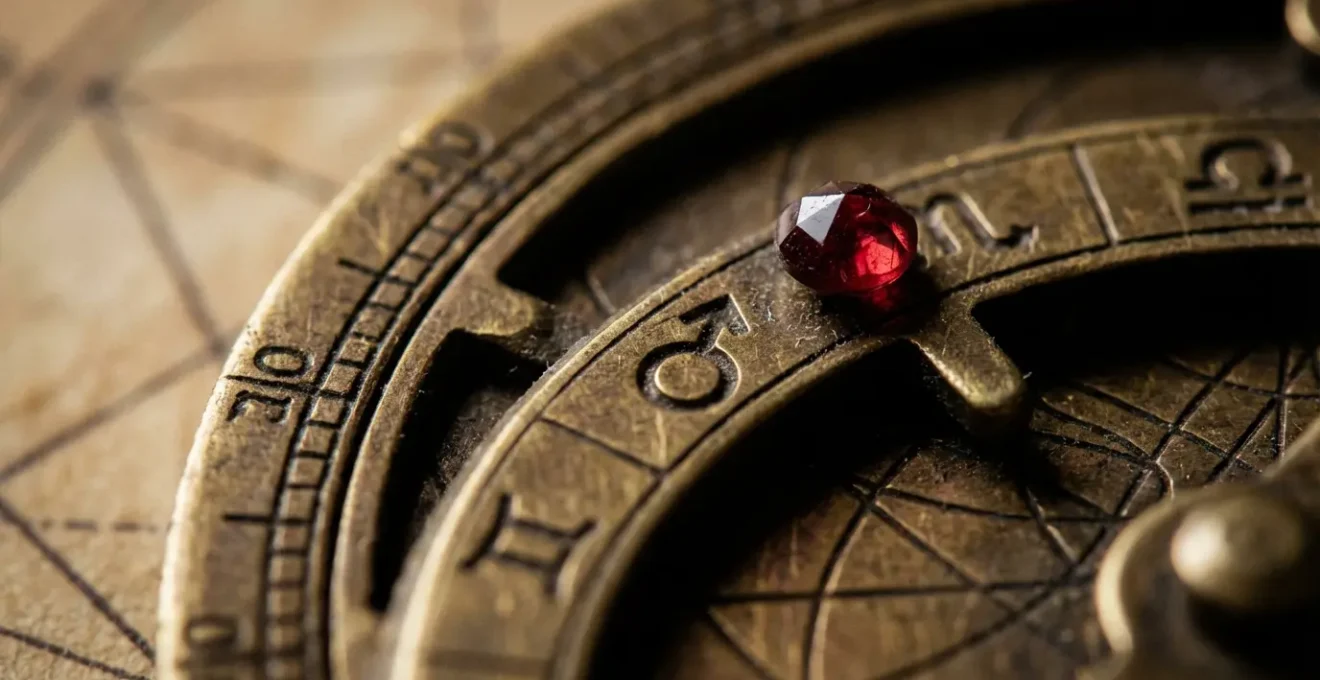
As the visual of the astrolabe suggests, this is about precision. It’s not about a vague feeling; it’s about pinpointing a specific sector for action. For example, professional astrologer Kathryn Hocking’s methodology focuses on exactly this. She advises that since Mars transits last only a few days when aspecting a specific planet, its position by house is more significant for actionable insights. Her readings prioritize which house Mars will occupy month-to-month, defining clear “activation periods” for specific life areas like career, finance, or relationships.
For instance, a Mars transit through your 10th House of Career is a prime time to push for a promotion or launch a public-facing project. A transit through your 2nd House of Income is ideal for initiating salary negotiations. By tracking this single data point, you move from vague prediction to strategic timing.
Ephemeris vs. App Algorithm: Which Is Better for Planning Your Week?
Once you commit to tracking transits, you face a choice of tools: a traditional ephemeris (a table of planetary positions) or a modern app’s algorithm. While apps offer instant accessibility, they often lack the context and foresight needed for true strategic planning. An ephemeris, whether in a book or software form, gives you the raw data, allowing you to be the analyst. As astrologer Amy Tripp notes in Refinery29, “You can find out about transits ahead of time by looking up an ephemeris… mark your calendar.” This proactive approach is the hallmark of a data-driven strategy.
App algorithms are designed for daily engagement. They tend to give equal weight to all transits, creating a high-noise environment where a fleeting, two-hour Moon aspect is presented with the same gravity as a two-year Saturn cycle. This is poor data hierarchy. An ephemeris, by contrast, allows you to see the big picture. You can spot long-term patterns, like the slow-moving outer planets’ transits that signal major life shifts, which are often minimized or ignored by daily-focused apps. It also clearly displays planetary ingresses (when a planet enters a new sign), which are critical moments for timing new initiatives.
The choice of tool depends on your planning horizon. For daily, tactical scheduling, an app can be useful. But for long-term strategic planning and making major life decisions, the macro view provided by an ephemeris is indispensable. The following table breaks down their core differences:
| Aspect | Ephemeris (Manual/Software) | App Algorithms | Best Use Case |
|---|---|---|---|
| Time Horizon | 6 months to years ahead | Daily to weekly focus | Long-term: Ephemeris | Short-term: Apps |
| Transit Weight | User determines importance | Equal weight to all aspects | Major decisions need human judgment |
| Outer Planets | Clearly visible patterns | Often minimized or ignored | Life changes require ephemeris view |
| Planetary Ingresses | Prominently displayed | Frequently missed | Timing launches needs ephemeris |
Ultimately, a sophisticated approach uses both. As an analyst would consult both a high-level dashboard and granular reports, an astrologer can use an ephemeris for the strategic overview and an app for daily tactical alerts, as long as they understand the limitations of each, as shown by this comparative analysis of planning tools.
The Overreaction Trap: Freaking Out Over a Moon-Pluto Opposition That Lasts 4 Hours
One of the biggest pitfalls of using astrology apps is losing a sense of scale. A notification about a “difficult” Moon-Pluto opposition can trigger anxiety, yet this entire event may only be in effect for a few hours. This is a classic case of a low signal-to-noise ratio. The Moon moves quickly, making dozens of aspects a week. Treating each one as a major event is a recipe for emotional exhaustion. The key is understanding transit granularity—the vast difference in duration and impact between various planetary movements.
The data is clear on this distinction. As transit duration research shows, Moon aspects typically last only 1-2 hours, creating fleeting moods or minor events. In stark contrast, a major transit from an outer planet like Neptune or Pluto can influence a specific point in your chart for two to three years, signifying a profound, life-altering process. Freaking out over a lunar aspect is like panicking over a brief passing cloud when you should be preparing for a long winter season.

The proper response to a short, challenging transit is not to cancel your plans but to practice mindful observation. Acknowledge the transit and its exact duration (“Okay, Moon opposes Pluto from 2-6 PM”). Contextualize it: this is a temporary trigger for existing themes in your life, not a brand-new crisis. Then, simply observe your emotional state without judgment, noticing its peak and decline. This analytical distance prevents overreaction and helps you calibrate your response to future alerts. You learn to differentiate a brief emotional shower from a hurricane.
This mindful approach transforms astrology from a source of anxiety into a tool for self-awareness. It allows you to use the information without letting it control you, recognizing that most daily transits are simply background noise, not life-defining events.
How to Use the Hourly Movement of the Moon to Schedule Tasks Efficiently?
While it’s crucial not to overreact to the Moon’s fleeting aspects, its rapid movement can be harnessed for highly efficient task scheduling. The Moon acts as a trigger, and by aligning your tasks with the nature of its hourly aspects, you can work with the energetic current instead of against it. This is the most granular level of astrological data analysis, akin to day-trading versus long-term investing. It’s about tactical, short-term optimization.
For example, a two-hour window when the transiting Moon forms a harmonious trine to Jupiter is an excellent time for brainstorming, pitching ideas, or networking. The energy is expansive and optimistic. Conversely, a trine to Saturn supports focused, disciplined work like editing a document or finalizing a contract. This isn’t about superstition; it’s about matching the psychological flavor of the moment to the task at hand. Astrologer Kathryn Hocking employs a balanced version of this, checking the Moon’s New and Full Moon house activations to set monthly intentions, using natural lunar cycles for productivity without obsessive hourly tracking.
The most famous lunar timing technique is avoiding the Void-of-Course (VOC) Moon. This occurs after the Moon makes its last major aspect in a sign and before it enters the next. Lasting from a few minutes to many hours, it’s a period when actions lack forward momentum. It’s an ideal time for routine tasks, editing, or review, but a notoriously poor time to launch new initiatives or hold important meetings where a decisive outcome is desired. The following table offers a simplified guide for this micro-scheduling:
| Moon Aspect | Duration | Best Tasks | Avoid |
|---|---|---|---|
| Moon-Jupiter Trine | 2-3 hours | Brainstorming, presentations, networking | Detail work, budgeting |
| Moon-Saturn Trine | 2-3 hours | Focused work, planning, contracts | Creative tasks, socializing |
| Moon-Mercury Sextile | 2 hours | Writing, emails, negotiations | Physical labor, rest |
| Void-of-Course Moon | Minutes to hours | Routine tasks, editing, meditation | New initiatives, important meetings |
By paying attention to these brief windows, as detailed in transit guides like those tracking daily planetary movements, you can add a layer of tactical efficiency to your daily workflow, using the Moon as a productivity timer.
AI Algorithms vs. Human Astrologers: Who Predicts Career Shifts Better?
When it comes to major life events like career shifts, the question of AI versus human expertise becomes critical. Can an algorithm that processes thousands of charts outperform the synthesized wisdom of a human astrologer? The answer lies in understanding their different strengths. AI excels at pattern recognition and raw data processing. It can instantly identify that Jupiter, the planet of expansion, is entering your 10th House of Career, a classic indicator of professional opportunity.
However, AI often fails at synthesis and context. A major career shift is rarely the result of a single transit. It’s usually a confluence of several factors. An AI might list ten different transits happening simultaneously with equal weight, creating confusion. A human astrologer, on the other hand, can identify the dominant theme, weigh the conflicting indicators, and synthesize them into a coherent narrative. They can see that a supportive Jupiter transit is being challenged by a restrictive Saturn transit and provide a nuanced strategy for navigating both.
An analysis of capabilities by the astrology platform Vama highlights this difference. Their findings show that humans excel at asking forward-looking, strategic questions that AI cannot conceptualize, such as, “What groundwork can you lay now to best leverage a major transit happening in two years?” The platform’s recommendation is a tiered approach: use AI for daily tracking and pattern identification, but consult a human for major life decisions and long-term strategy.
Case Study: AI for Timing, Humans for Strategy
A user considering a startup launch sees an AI alert for “favorable business transits.” The AI correctly identifies Jupiter trine their Midheaven. However, a human astrologer notices that Saturn is simultaneously squaring their natal Mars, indicating potential resource blockages and burnout. The AI sees “go,” but the human advises a “go, but…” strategy: launch the marketing (Jupiter), but secure a six-month funding runway first (Saturn) to mitigate the risk the AI missed. This demonstrates the irreplaceable value of human synthesis in high-stakes decisions.
The most effective approach combines both. Use AI as your data analyst to gather information and flag key moments. Then, use a human astrologer—or your own well-honed judgment—as the strategist to interpret that data, create context, and build a truly resilient plan.
How to Track the Moon’s Void-of-Course Phases to Avoid Useless Meetings?
Of all the granular timing techniques, tracking the Void-of-Course (VOC) Moon offers one of the most practical and immediate returns on investment, especially in a professional context. As mentioned, the VOC period is when the Moon is “between conversations” with other planets. Initiatives started during this time often fail to gain traction, lead to nothing, or require significant revision later. It’s the astrological equivalent of sending a critical email into a spam folder.
Knowing these times allows you to strategically avoid scheduling important events like product launches, contract signings, or crucial first meetings. Instead, you can use these periods for tasks that benefit from a lack of consequence: brainstorming sessions where you don’t want immediate decisions, review meetings, or clearing out your inbox. The key is making this data easily accessible in your daily workflow. Fortunately, there are several simple methods:
- Calendar Integration: Many astrology websites (like Astro-Seek or Lunarium) offer free iCal files that you can import directly into your Google or Apple Calendar. This overlays the VOC periods onto your existing schedule.
- Real-Time Alerts: Dedicated Twitter accounts or apps like Time Passages can be configured to send notifications when a VOC period begins, or highlight them visually in your daily view.
- Advance Planning: For long-term planning, you can use a free online ephemeris from sites like Astro.com, which often list all VOC times for the month at the end of their tables.
The impact of ignoring these periods is not just anecdotal. A study of business meetings and VOC cycles documented a recurring pattern: a major merger signed during a VOC Moon fell through after months of work, and a dating app company noted significantly lower follow-up rates for initial conversations started during these phases. The conclusion from this analysis of business activities and VOC periods is that actions taken lack forward momentum because the energy signifies completion, not initiation. By simply being aware of these few hours a day or every other day, you can avoid scheduling efforts that are astrologically destined to go nowhere.
Key Takeaways
- Generic horoscopes are a business model, not a predictive tool, as they omit your birth time.
- Actionable astrology comes from tracking specific transits (like Mars) through your unique house system.
- Distinguish high-impact, long-term transits (Saturn, Pluto) from low-impact, short-term ones (Moon) to avoid overreaction.
Identifying Reliable Forecasts: 3 Red Flags in Generic Astrology Reports
Now that you understand the data hierarchy, you can develop a critical eye for the information you consume. A reliable astrological forecast, whether from an app or a human, has the hallmarks of good data analysis: it is specific, contextualized, and transparent about its limitations. Conversely, generic reports are filled with red flags that signal a low-quality data source. By learning to spot them, you can effectively audit your astrology inputs.
Here are the key indicators that distinguish a vague, generic report from a reliable, data-driven one:
- Vague Timing vs. Specific Dates: A generic report will say “Changes are coming soon.” A reliable one will state, “Jupiter enters your 10th house on March 3rd and will remain for 12 months, signaling a year of career opportunity.” It provides a specific, verifiable timeframe.
- Barnum Statements vs. Technical Detail: Generic reports use “Barnum statements” that apply to almost anyone (e.g., “You will face some challenges”). A reliable report will name the source of the challenge: “Mars will square your natal Saturn from Feb 15-22, expect potential delays or frustrations with authority figures on your projects.”
- Scale Confusion vs. Data Hierarchy: As we’ve seen, a major red flag is when a report gives equal weight to all events. A trustworthy forecast will differentiate scale, clearly explaining the difference in impact between a fleeting 2-hour Moon transit and a transformative 2-year Saturn cycle. This shows an understanding of astrological signal-to-noise ratio.
A reliable source is also transparent. TrueSelf.com’s analysis of the industry puts it bluntly: “If your astrologer does not offer a disclaimer that information is imprecise… you are supporting a career scam artist.” A good analyst, or astrologer, knows and communicates the limitations of their model. As a final check, a report on astrology app reliability found that aggressive upsell pressure is another red flag; quality sources provide value upfront rather than constantly pushing for a paid report.
Your Action Plan: Auditing Your Astrology Data Sources
- Check for Birth Time Input: Does the app or service demand your exact birth time (hour and minute)? If not, immediately categorize its output as low-resolution, entertainment-level data.
- Inventory the Data Points: Does the report specify the transiting planet, the aspect being made (e.g., square, trine), and the natal planet/house being affected? A simple “Tough day ahead” is not data; “Moon square natal Saturn” is.
- Assess the Time Horizon: Does the forecast differentiate between short-term events (hours/days) and long-term trends (months/years)? If all events are presented with equal urgency, the source lacks analytical depth.
- Evaluate Specificity vs. Vagueness: Is the advice generic (“Be careful with money”) or actionable (“With Saturn transiting your 2nd house, now is a time for budgeting, not speculative investment”)? Look for advice tied to specific astrological mechanics.
- Identify the Source of Intelligence: Is the forecast purely algorithmic, or is there an option for human synthesis? For major life decisions, confirm there is a path to contextualized, human-led interpretation.
By shifting your mindset from that of a passive believer to an active data analyst, you transform astrology from a confusing set of conflicting predictions into a powerful system for strategic self-awareness and timing. The goal is not to let the stars dictate your life, but to use their map to navigate it more intelligently.