
Stop sending resumes into a black hole. Astrological timing isn’t about luck; it’s a strategic scheduling tool to ensure your application gets seen.
- Aligning your application with the New Moon significantly boosts its visibility and potential for new beginnings.
- Scheduling interviews during specific Planetary Hours (like Sun or Venus) can influence the outcome in your favor.
Recommendation: Apply these cosmic scheduling tactics to move from the ‘no reply’ pile to the ‘interview scheduled’ list by treating timing as your secret professional weapon.
You’ve polished your resume until it shines. You’ve written a cover letter so compelling it could move mountains. You hit “send” with a surge of hope, only to be met with… silence. It’s the modern job seeker’s nightmare: the digital black hole, where good applications go to disappear without a trace. You’ve followed all the conventional advice—customizing for keywords, networking on LinkedIn—but you still feel like you’re playing a game with unknown rules. You’re not just looking for a job; you’re looking for an edge.
What if that edge wasn’t in *what* you send, but *when* you send it? Forget generic star sign advice. We’re moving beyond “Leos make good leaders” into the realm of tactical, professional astrology. Think of it not as mysticism, but as cosmic scheduling—a form of energetic leverage that a savvy recruiter would use if they knew how. This is about understanding the flow of energy and using it to ensure your carefully crafted materials land on a receptive desk, not in a void.
This guide will give you the insider timing secrets to navigate the entire job change cycle. We’ll explore the optimal moments to submit your application, how to select an interview slot that gives you a psychological advantage, the best cosmic weather for negotiating a higher salary, and even how to resign gracefully. It’s time to stop guessing and start scheduling your success with planetary precision.
This article provides a complete roadmap for using astrological timing to your advantage. Below is a summary of the key strategic moments we will cover to transform your job search from a game of chance into a well-executed plan.
Summary: The Astrology of Job Hunting: When to Send Your Resume for the Best Results?
- Why Applying During the New Moon Increases Your Chance of an Interview?
- How to Pick the Best Time Slot for an Interview Using Planetary Hours?
- Mass Applying (Gemini) vs. Targeted Networking (Libra): What Works for You?
- The Black Hole Mistake: Sending Applications When the Moon is Void-of-Course?
- How to Negotiate Your Salary When Mercury is Direct and Strong?
- When Is the Best Time to Read Your Scope: Morning vs. Night Visualization?
- The Time Zone Trap: Why Not Adjusting for Daylight Savings Ruins the Chart?
- The Art of Resignation: How to Quit Your Job Without Burning Bridges (Astrologically)?
Why Applying During the New Moon Increases Your Chance of an Interview?
In astrology, the New Moon marks the beginning of a new lunar cycle. It’s a moment of cosmic reset, a dark sky pregnant with potential. From an energetic standpoint, this is the most fertile time to plant seeds for what you want to grow. For a job seeker, your application is that seed. Sending your resume during the New Moon phase is the equivalent of planting a seed in the most fertile soil, under the most favorable conditions. It’s an act of deliberate initiation, aligning your personal ambition with a universal cycle of new beginnings.
Think of the hiring process from the other side. Recruiters are inundated with applications. Yours needs to arrive with an extra spark. Submitting it during the New Moon imbues it with the energy of “newness” and “potential,” making it stand out energetically from the hundreds of others sent on a random Tuesday afternoon. It’s a declaration to the universe that you are starting a new chapter. This timing suggests you are not just applying for a job, but initiating a significant professional evolution. It aligns your action with the powerful forces of inception, increasing the likelihood that it will be seen as a fresh, promising opportunity by the person on the receiving end.
Action Plan: Time Your Job Application with the New Moon
- Calculate: Pinpoint the exact new moon date and time for your location using a reliable astrological calendar or online calculator.
- Identify: Determine which astrological house the new moon activates in your natal chart (10th for career, 6th for daily work, 2nd for income) to tailor your intention.
- Prepare: Have all application materials ready 2-3 days before the new moon to eliminate last-minute stress and ensure quality.
- Submit: Send your application within the 8 hours following the exact moment of the new moon to harness its maximum manifestation energy.
- Intend: Before clicking ‘send’, perform a small ritual: light a candle, visualize your success in the role, and release your application with focused, confident energy.
By synchronizing your efforts with this potent lunar phase, you transform a mundane task into a powerful act of creation.
How to Pick the Best Time Slot for an Interview Using Planetary Hours?
Once you’ve landed the interview, the next strategic choice is scheduling. Most candidates just pick what’s convenient. You can do better. Ancient astrologers divided the day and night into 12 “hours” each, ruled by a specific planet. These are the Planetary Hours. Choosing an interview slot during an hour ruled by a favorable planet is like choosing the right key for a specific lock. You are aligning the “vibe” of the meeting with your desired outcome. This is not about manipulation, but about creating an environment where your best qualities can naturally shine.
For example, scheduling a final-round interview for a leadership position during the Hour of the Sun lends your presence an aura of authority and confidence. If you’re interviewing for a creative or client-facing role, the Hour of Venus fosters harmony, charm, and likability, helping you build instant rapport. It’s about giving yourself a subtle, yet powerful, energetic advantage before you even walk in the door. This is the recruiter’s edge: knowing that the context and timing of a meeting are just as important as the content discussed within it.
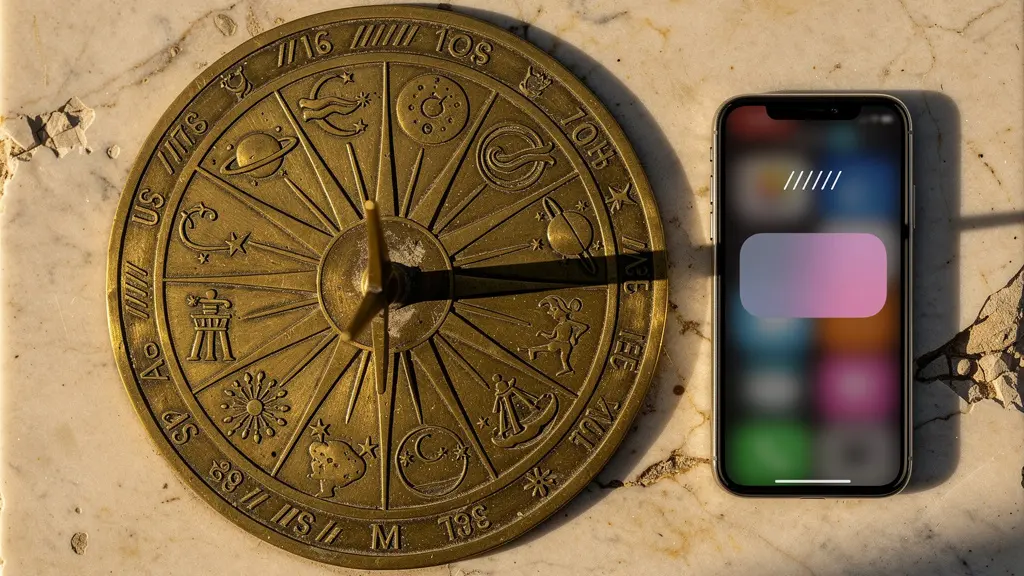
The table below breaks down which planetary hours are best suited for different types of interviews and professional actions. As the team at PlanetaryHours.today explains, these timings are calculated based on local sunrise and sunset, making them unique to your specific location and the time of year.
| Planetary Hour | Best Interview Type | Key Advantage | Timing Strategy |
|---|---|---|---|
| Sun Hour | Leadership positions | Use Sun hours for job interviews, leadership meetings, visibility tasks | Schedule for morning slots when Sun energy peaks |
| Mercury Hour | Technical/Communication roles | Use Mercury hours for emails, writing, studying, speeches | Ideal for roles requiring analytical thinking |
| Venus Hour | Creative/Client-facing roles | Pick a Venus hour for meetings, art, beauty, reconciliation, and social harmony. Great for actions that need attraction and ease | Best for building rapport with interviewers |
| Jupiter Hour | Senior positions/Final rounds | Use Jupiter hours for money rituals, budgeting, investments, legal matters | Schedule for expansion and growth opportunities |
Using this system allows you to step into each conversation with the planetary energy already working in your favor.
Mass Applying (Gemini) vs. Targeted Networking (Libra): What Works for You?
In the job search, there are two primary strategies: the wide net and the focused line. Astrologically, these correspond to the archetypes of Gemini and Libra. The Gemini approach is about information and volume: mass applying, tweaking your resume for dozens of listings, and playing the numbers game. It’s fast, adaptable, and covers a lot of ground. This strategy works best when the job market is hot, or your skills are broadly applicable. It’s a data-gathering mission to see what sticks.
The Libra approach, by contrast, is about relationships and balance. This is targeted networking, cultivating connections, seeking introductions, and focusing on a handful of perfect-fit opportunities. It’s a slower, more deliberate strategy built on creating harmony and mutual benefit. This works best for senior roles, niche industries, or when you’re trying to make a significant career pivot. It’s about finding the perfect partnership, not just any job. Understanding your own astrological chart (especially the placement of Mercury and Venus) can reveal which approach is more natural and likely to be successful for you.
Jupiter, the planet of growth and abundance, can bring opportunities for career advancement during its transit through your 10th house or when it aspects your ascendant or 6th house. It often signals periods of professional growth, promotions, or new beginnings.
– Astro Taare Astrology Team, Astrological Guide to Career Timing
Ultimately, the most successful job seekers often blend both: using the Gemini approach for research and the Libra approach for high-priority targets. The key is knowing when to deploy each strategy for maximum impact.
The Black Hole Mistake: Sending Applications When the Moon is Void-of-Course?
This is the single biggest timing mistake a job seeker can make. The “void-of-course” Moon is a period when the Moon has made its last major aspect to another planet in a sign and has not yet entered the next sign. These periods can last from a few minutes to over a day. Astrologically, anything initiated during a void-of-course Moon is said to “come to nothing.” It’s the literal definition of the digital black hole. Your application won’t be seen, the job will be filled internally, the company will decide not to hire, or some other unforeseen issue will arise. It’s wasted effort.
From a recruiter’s perspective, this is the energetic equivalent of sending an email that lands in a spam folder that is never checked. The action is taken, but the intended connection is never made. It’s crucial to check an ephemeris or an online astrological calendar for these periods and simply… wait. Do not send resumes, schedule interviews, or have important follow-up calls during a void Moon. Use this time for preparation, research, or anything other than initiating new contact. Avoiding this simple mistake can save you countless hours of frustration and the demoralizing feeling of being ignored.

Case Study: The HR Manager’s Void-of-Course Experiment
An HR manager, curious about this astrological phenomenon, decided to track interviews over a two-year period. In an informal experiment documented by Astrologgia, out of over 20 interviews conducted, two happened during a void-of-course Moon. Despite both candidates interviewing well and being offered the job, neither accepted. One took a competing offer, and the other decided the commute was too long. True to the traditional meaning, “nothing came out of the interviews,” confirming the void Moon’s reputation for derailing initiatives.
To keep your job search on track, follow these simple rules during void-of-course periods:
- DON’T: Submit your resume for a new job.
- DON’T: Schedule job interviews or critical business presentations.
- DON’T: Start a new job or hold important strategy meetings.
- DO: Use this time for reflection, meditation, and reviewing your goals.
- DO: Organize your existing job search materials, but refrain from sending anything.
Being aware of these cosmic dead zones is a simple, powerful way to ensure your energy and effort are never wasted.
How to Negotiate Your Salary When Mercury is Direct and Strong?
You have the job offer. Congratulations. Now comes the most delicate dance: the salary negotiation. This is Mercury’s domain—the planet of communication, contracts, and commerce. Timing this conversation is absolutely critical. The golden rule is simple: negotiate only when Mercury is direct and strong. This means it is moving forward at a good speed and is free from the confusing shadow periods before and after it goes retrograde.
When Mercury is direct, communication is clearer, details are less likely to be missed, and agreements made are more likely to be honored as intended. You can articulate your value with precision, and the hiring manager can understand and process your request without confusion. Attempting to negotiate during Mercury retrograde is a recipe for disaster. Misunderstandings, lost emails, rescinded offers, and agreements that fall apart later are common. It’s like trying to have a clear conversation over a bad cell connection—the message gets distorted. Wait for the cosmic signal to be clear and strong before you talk numbers. This patience will pay dividends, literally.
The ideal timing for salary talks can be further refined by considering other planetary supports. This table, based on insights from sources like career timing astrology, shows how different planets can impact your negotiation success.
| Planetary Configuration | Negotiation Impact | Best Timing |
|---|---|---|
| Mercury Direct | Clear communication, avoid misunderstandings | 2-3 weeks after Mercury stations direct |
| Mars Well-Aspected | Courage and assertiveness in asking | Mars trine or sextile natal Sun |
| Jupiter Support | Expansion of income potential | Jupiter transiting 2nd or 10th house |
| Mercury Retrograde | Communication can become muddled, making it a less-than-ideal time to negotiate a new job offer | Avoid completely |
By choosing a moment of cosmic clarity, you ensure that this crucial conversation is built on a solid, stable foundation.
When Is the Best Time to Read Your Scope: Morning vs. Night Visualization?
Integrating astrology into your job search isn’t just about big actions; it’s about daily alignment. The simple act of reading your horoscope or checking daily transits can be optimized. The key is to sync your consumption of astrological intel with the energy of the Sun and Moon. This creates a powerful daily ritual of intention and reflection that keeps you focused and motivated.
Think of it this way:
- Morning (Sun’s Domain): The Sun is about action, identity, and projecting your energy into the world. Use the morning hours, especially the Hour of the Sun right after sunrise, to read your career horoscope and set your intentions for the day. This is proactive energy. You are absorbing the cosmic forecast and deciding how you will use it to fuel your actions—which jobs to target, who to contact.
- Evening (Moon’s Domain): The Moon is about receptivity, emotion, and internal processing. Use the evening hours to visualize your success. Picture yourself acing the interview, receiving the offer, or thriving in your new role. This is receptive energy. You are aligning your subconscious mind with the goals you set in the morning, allowing the universe to work on your behalf while you rest.
This daily practice creates a powerful feedback loop. Morning intention-setting gives your actions direction, while evening visualization reinforces your belief and magnetizes the outcome. It turns your job search from a series of stressful tasks into a continuous, co-creative process with the cosmos.
This simple habit keeps your mindset positive and your actions aligned with your ultimate career goals.
The Time Zone Trap: Why Not Adjusting for Daylight Savings Ruins the Chart?
In the world of tactical astrology, precision is everything. A few minutes can shift a planetary hour, and a few degrees can change the entire meaning of a transit. One of the most common and costly errors is ignoring time zones and, especially, Daylight Saving Time (DST). Astrological calculations for events like New Moons, void-of-course periods, and planetary hours are based on the *actual* local time. If your calendar says the New Moon is at 2 PM EST, but you’re in a location that observes EDT, you’re already an hour off.
This might seem like a small detail, but it can ruin your strategy. Imagine you meticulously plan to send your resume eight hours after the exact New Moon, but your calculation was off by an hour due to DST. You might have just sent your application in a less potent, or even unfavorable, window. The same applies to remote interviews. If you’re in New York interviewing with a company in San Francisco, you must calculate the planetary hours for the *interviewer’s location*, not your own, as that is where the event is physically taking place. You need to be in *their* Venus hour, not yours.
Modern astrological software and websites usually handle these adjustments automatically, but it’s your responsibility to ensure you’ve entered the correct location and that DST is being accounted for. Double-checking your tools and understanding the principles behind them is non-negotiable. Falling into the time zone trap is an amateur mistake that can neutralize an otherwise brilliant cosmic strategy.
This commitment to precision ensures that your carefully timed actions have their intended and full effect.
Key takeaways
- Initiate with the New Moon: Always submit applications and launch new professional initiatives during the New Moon phase to harness the energy of new beginnings.
- Leverage Planetary Hours: Schedule specific actions like interviews (Sun/Venus hour) and important emails (Mercury hour) to align with the energy of the moment.
- Avoid the Void: The single most important rule is to never initiate anything important—especially sending a resume—when the Moon is void-of-course.
The Art of Resignation: How to Quit Your Job Without Burning Bridges (Astrologically)?
Securing a new job is only half the process. The way you exit your current role sets the stage for your future. A graceful resignation maintains your professional reputation and keeps doors open. Astrology can help you time this final act to ensure a smooth, positive transition rather than a dramatic, bridge-burning exit. The key is to plan your resignation during a period of cosmic calm and goodwill.
First and foremost, heed the wisdom of Mercury’s cycle. As expert Hanish Bagga notes, periods of communicative confusion are not the time for life-altering decisions. Giving your notice during Mercury retrograde is asking for your intentions to be misconstrued, for the transition plan to be chaotic, or for your final weeks to be filled with unnecessary drama.
Certain planetary aspects might suggest it’s better to hold off on major career decisions. For example, when Mercury is retrograde, communication can become muddled, making it a less-than-ideal time to negotiate a new job offer or launch a business.
– Hanish Bagga, Astrology Career Timing Transitions
Beyond avoiding retrograde, you can use a more refined approach. Time your resignation for a moment that signifies both a clean ending and a fortunate new beginning. A waning moon, for example, is perfect for closure and letting go. Scheduling your final farewell meetings or lunches during a Venus hour can ensure that relationships remain warm and amicable. This isn’t about superstition; it’s about consciously choosing moments that support the energy you want to create: one of gratitude, closure, and forward momentum.
- Check Mercury’s Status: The cardinal rule. Never resign when Mercury is retrograde. Wait until it is direct and out of its shadow period.
- Time the Moon’s Aspects: Ideally, submit your notice when the Moon separates from a restrictive planet like Saturn (signifying the end of a duty) and applies to an opportunistic one like Jupiter (signifying a positive new venture).
- Schedule Farewells with Venus: Plan your exit interview and any farewell drinks or lunches during a Venus hour to maintain social harmony and positive relationships.
- Avoid the Void: Just as with applications, do not submit your formal resignation letter when the Moon is void-of-course.
- Plan Your Last Day: If possible, have your last day coincide with a waning moon, which supports closure and makes it easier to release the old job emotionally.
By applying these final timing tactics, you can ensure your career narrative is one of conscious, empowered, and successful transitions, from first application to final farewell.
Frequently Asked Questions on The Astrology of Job Hunting
Do planetary hours change with daylight saving time?
Yes, your local daylight-saving rules affect planetary hour start/end times. The system is based on the actual, local time of sunrise and sunset on any given day.
Are planetary hours the same worldwide?
No. Planetary hours are fundamentally local. Their exact start and end times depend on the local sunrise and sunset, which change based on your specific city, the season, and whether daylight saving time is in effect.
How do I calculate planetary hours for remote interviews across time zones?
To time an event for a remote location, you must calculate the planetary hours for that specific place. The system computes sunrise and sunset for the event’s location, accounting for its local timezone and any daylight saving rules. The “daytime” is then split into 12 equal (but seasonal) hours from sunrise to sunset.