In summary:
- Your emotional state isn’t random; it’s often linked to the lunar cycle’s distinct energetic phases.
- Effective self-care isn’t about following a rigid script but about diagnosing your energy (depleted, stagnant, or overstimulated) and choosing a matching ritual.
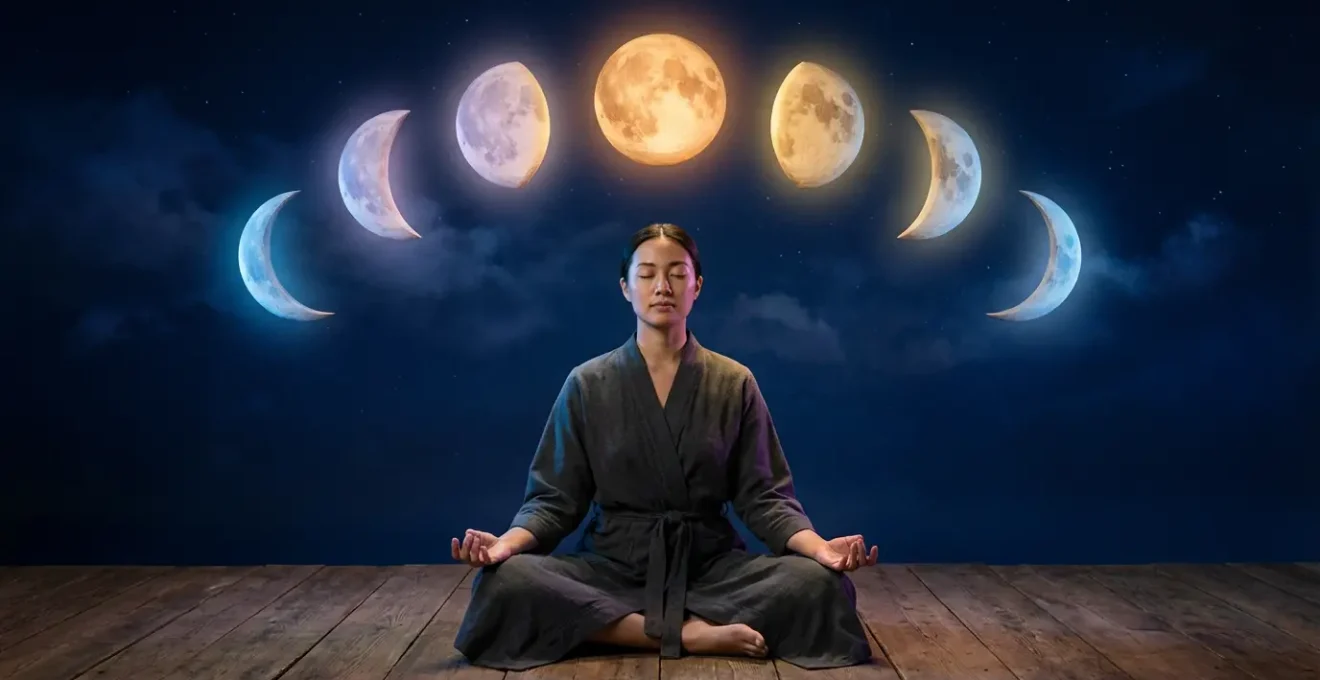
- The four main lunar phases (New, Waxing, Full, Waning) each require a different focus: rest, action, release, and reflection.
- Protecting your energy, especially during intense lunar moments, is a crucial skill for maintaining emotional balance.
Do you ever feel like your emotions are a tide, pulling you into deep, quiet moods one day and then tossing you in waves of intense feeling the next, all without a clear reason? For many of us, these fluctuations feel random and disruptive, leaving us feeling out of control. We might try to manage them with conventional tools, but often find ourselves reacting to the symptoms rather than understanding the root rhythm.
Common wisdom in holistic circles suggests we should “set intentions on the new moon” or “release on the full moon.” While valuable, this advice often remains superficial. It tells us *what* to do, but not *why* we feel a certain way or *how* to choose the right practice for our specific energetic state. This can lead to frustration when a recommended ritual doesn’t resonate or, worse, makes us feel even more drained.
But what if the key wasn’t just to follow the moon’s schedule, but to use it as a diagnostic tool? The true power of lunar syncing lies in learning to identify your internal energy—are you depleted, overstimulated, or emotionally stagnant? This is the perspective shift this guide offers. It’s about moving from a prescriptive approach to a responsive one, transforming the lunar cycle from a disruptive force into a personal rhythm for profound emotional stability.
Throughout this guide, we will explore the distinct energy of each lunar phase, understand the nuances that astrological signs bring, and provide a toolkit of rituals. You will learn to diagnose your own needs and choose the precise practice—whether it’s gentle water soothing or a cathartic fire release—that will bring you back into balance.
This article provides a complete framework for understanding and harmonizing with the lunar cycle. Below is a summary of the key areas we will explore to help you build a personalized and effective practice.
Summary: A Guide to Mastering Your Emotional Rhythm with the Moon
- Why You Feel Exhausted During the Dark Moon Phase (Before the New Moon)?
- How to Create a Self-Care Routine That Matches the 4 Lunar Phases?
- Water Soothing vs. Fire Release: Which Emotional Release Technique Do You Need?
- The “Full Moon Hangover” Mistake: Over-Socializing When You Should be Grounding
- How to Adjust Your Sleep Schedule When the Moon is in an Air Sign?
- Why Moon in Cancer Needs Privacy While Moon in Gemini Needs Constant Noise?
- How to Set Up a “Decompression Zone” in Your House for Water Sign Recovery?
- Water Signs and Boundaries: Protecting Your Energy as a Highly Sensitive Cancer or Pisces
Why You Feel Exhausted During the Dark Moon Phase (Before the New Moon)?
You feel exhausted during the dark moon phase because this is the natural end of the 28-day cycle, a time of energetic release and culmination. Just before the new moon, in what is often called the Balsamic or Dark Moon phase, the life force energy of the cycle is at its lowest. Your body and spirit are instinctively prompted to let go of everything from the past month—emotions, projects, and tensions. This process of shedding is energetically demanding, often resulting in profound physical and mental fatigue.
Think of it as nature’s exhale. All month, you’ve been building, acting, and experiencing. Now, the moon’s light has vanished, creating a sacred darkness that encourages you to turn inward and rest. Fighting this natural urge by pushing through with high-energy activities can lead to burnout. This period is not meant for starting new things or making major decisions; it’s a sacred pause designed for integration and deep rest before the next cycle begins.
To honor this phase, it’s essential to listen to your body’s cues. Instead of scheduling demanding tasks, focus on gentle and restorative activities. This is the time to clear your calendar as much as possible and give yourself permission to be still. Practices that support this phase include:
- Scheduling lighter activities and avoiding major decisions.
- Taking long, warm baths to soothe the nervous system.
- Engaging in gentle stretching or restorative yoga.
- Journaling to release any lingering thoughts or emotions from the previous cycle.
- Prioritizing sleep and allowing yourself to nap if you feel the need.
Embracing this period of low energy is not a sign of weakness, but a profound act of self-care. By aligning with this natural rhythm of rest, you prepare a fertile ground for the intentions you’ll set at the upcoming new moon, ensuring you begin the next cycle feeling refreshed and centered.
How to Create a Self-Care Routine That Matches the 4 Lunar Phases?
Creating a self-care routine that matches the four lunar phases involves aligning your activities with the natural energetic flow of each stage: introspection and planning for the New Moon, active growth for the Waxing Moon, release and celebration for the Full Moon, and reflective letting go for the Waning Moon. This rhythmic approach ensures your actions are supported by, not fighting against, the prevailing cosmic energy.
Instead of a one-size-fits-all approach to wellness, lunar-synced self-care is dynamic. It acknowledges that your needs change throughout the month. The key is to have a toolkit of practices ready for each phase, allowing you to respond to your internal state with the right kind of support. This creates a sustainable rhythm that prevents burnout and enhances emotional well-being.
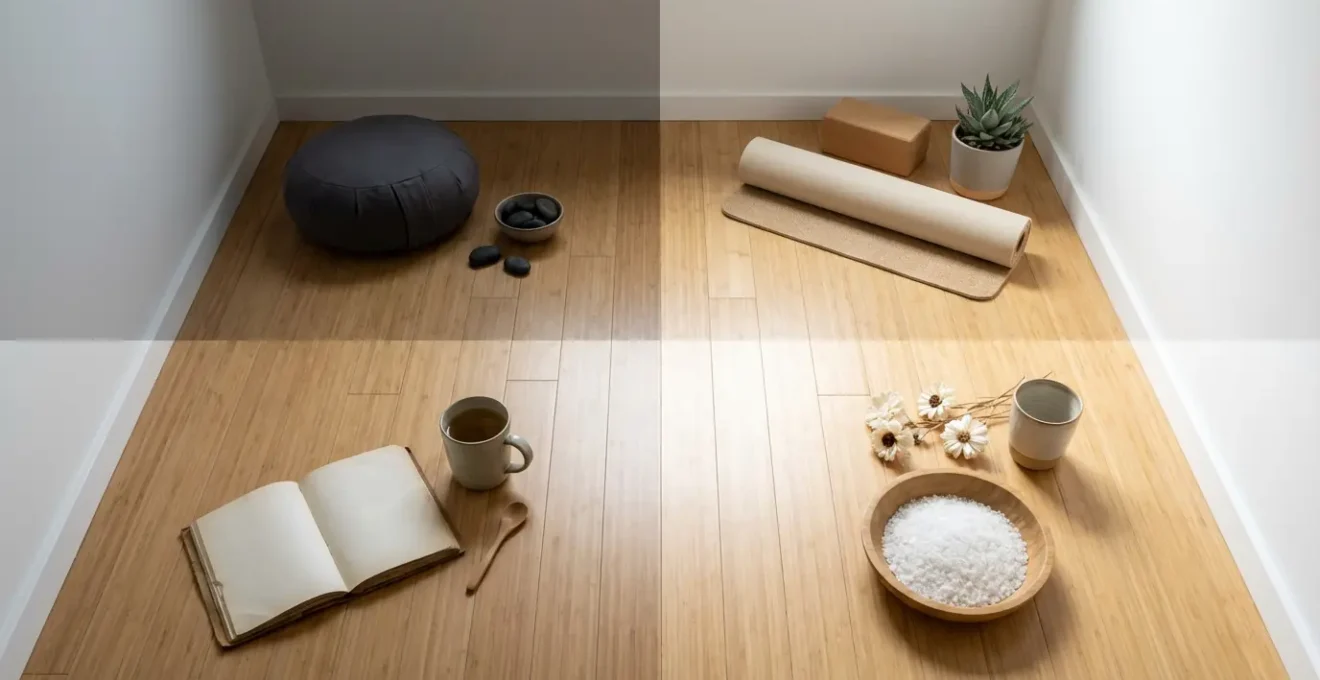
The image above beautifully illustrates how different environments can support the energy of each phase. A dark, quiet corner is perfect for the New Moon’s introspection, while a brightly lit space encourages the expressive energy of the Full Moon. The following table breaks down the specific focus and recommended activities for each of the four primary phases.
| Lunar Phase | Energy Type | Self-Care Focus | Recommended Activities |
|---|---|---|---|
| New Moon | Introspective, Low | Rest & Intention Setting | Journaling, meditation, planning |
| Waxing Moon | Building, Active | Action & Growth | Exercise, starting projects, socializing |
| Full Moon | Peak, Intense | Release & Celebration | Gratitude practice, emotional release, gatherings |
| Waning Moon | Declining, Reflective | Letting Go & Rest | Decluttering, reflection, gentle movement |
By using this framework, you can begin to build a routine that feels less like a chore and more like a harmonious dance. It’s about listening to both the sky above and the wisdom within your own body.
Water Soothing vs. Fire Release: Which Emotional Release Technique Do You Need?
The emotional release technique you need depends on an “energetic diagnosis” of your internal state. If you feel overwhelmed, anxious, and emotionally chaotic, you need Water Soothing—gentle practices that calm the nervous system. If you feel stuck, stagnant, repressed, or angry, you need Fire Release—dynamic, cathartic practices that move blocked energy out of the body. Choosing the right one is crucial, especially around the full moon when emotions are amplified.
The peak energy of the full moon often brings our feelings to the surface with an intensity that can be jarring. As the Goodhabit Editorial Team notes in their article on moon phases, this is a time of heightened energy and potential volatility. They observe that during a full moon, “you may experience pretty dramatic mood swings — going from passionate to combative at a moment’s notice.” This peak makes it the perfect time for release, but using the wrong method can be ineffective or even counterproductive.
The full moon and new moon are at opposite points during a lunar cycle, so while the new moon had you turning inward, the full moon will bring on heightened emotions, for better or for worse, and a release of energy. You may experience pretty dramatic mood swings — going from passionate to combative at a moment’s notice.
– Goodhabit Editorial Team, How the Phases of the Moon Affect Your Mood
Before you act, take a moment to scan your body and mind. Are your feelings like a raging river (overwhelm) or a frozen lake (stagnation)? Answering this question is the key to effective release. Here are some indicators to help you diagnose your needs:
- Fire Release Indicators: Feeling stuck, stagnant energy, repressed anger or frustration, a need for dynamic movement, feeling “numb” or disconnected from your emotions. Practices include vigorous exercise, dancing, shouting into a pillow, or safely burning a piece of paper with your releases written on it.
- Water Soothing Indicators: Feeling overwhelmed, chaotic energy, anxiety, sadness, a need for gentle flow and comfort. Practices include taking a salt bath, crying, listening to calming music, or sitting by a natural body of water.
Beyond water and fire, consider Air (writing or talking it out) and Earth (grounding through physical touch with nature) as other options. The goal is not to follow a formula, but to develop an intuitive relationship with your own emotional landscape, using the moon as your guide.
The “Full Moon Hangover” Mistake: Over-Socializing When You Should be Grounding
The “Full Moon Hangover” is the state of profound energetic and emotional depletion that occurs after the peak intensity of the full moon. It’s caused by a common mistake: over-socializing and over-extending yourself when your system is already in a state of high sensitivity and requires grounding. Instead of celebrating wildly, the wiser approach is to manage your energy carefully to avoid this draining after-effect.
The full moon’s gravitational pull doesn’t just affect tides; it tangibly impacts our bodies. Research consistently shows a link between this lunar phase and sleep disruption. For example, a prominent study found that during the full moon phase, participants took 5 minutes longer to fall asleep, slept for 20 minutes less, and experienced a 30% reduction in deep sleep. This physiological stress makes you more vulnerable to absorbing external energies and becoming depleted. When you combine this with crowded social events, you create the perfect recipe for a hangover, even without a drop of alcohol.
The key to prevention is proactive grounding and energetic hygiene. This doesn’t mean you must become a hermit. It means being intentional with your social interactions and having a “prevention kit” ready. The goal is to consciously protect your energy field before, during, and after social engagements. This allows you to enjoy the celebratory feeling of the full moon without paying the price the next day.
Here are some practical grounding techniques to build your prevention kit:
- Before events: Carry grounding stones like hematite or black tourmaline in your pocket to stabilize your energy.
- During gatherings: Take frequent breaks. Step outside for fresh air or find a quiet corner to practice three deep, centering breaths.
- Energetic shielding: Before entering a crowd, visualize a protective shield of light around your aura, preventing you from absorbing stray emotions.
- After socializing: Immediately take a bath or shower with Epsom salts to cleanse your energy field of anything you may have picked up.
- Emotional processing: Journal about any feelings that arose during the event to release what you absorbed from others and distinguish it from your own.
By treating the full moon with respect for its intensity, you can engage with its powerful energy consciously, celebrating its peak while remaining centered and protected. This transforms it from a potentially draining event into a peak experience of clarity and release.
How to Adjust Your Sleep Schedule When the Moon is in an Air Sign?
To adjust your sleep when the moon is in an Air sign (Gemini, Libra, or Aquarius), you must actively counter the sign’s mental energy with grounding, Earth-element practices. Air moons stimulate the mind, leading to racing thoughts, brilliant middle-of-the-night ideas, and a general feeling of being “in your head,” all of which can disrupt sleep. The solution is to create a pre-sleep ritual designed to calm the mind and bring your awareness back into your body.
The influence of an Air sign moon is specifically mental. Gemini’s energy is communicative and curious, Libra’s seeks balance and can get lost in pros-and-cons, and Aquarius’s is innovative and future-focused. While fantastic for brainstorming, this cerebral buzz is the enemy of rest. A typical sleep routine may not be enough; you need a protocol specifically designed to “unplug” the mind. This involves creating strong boundaries with technology and introducing sensory experiences that anchor you in the present moment.
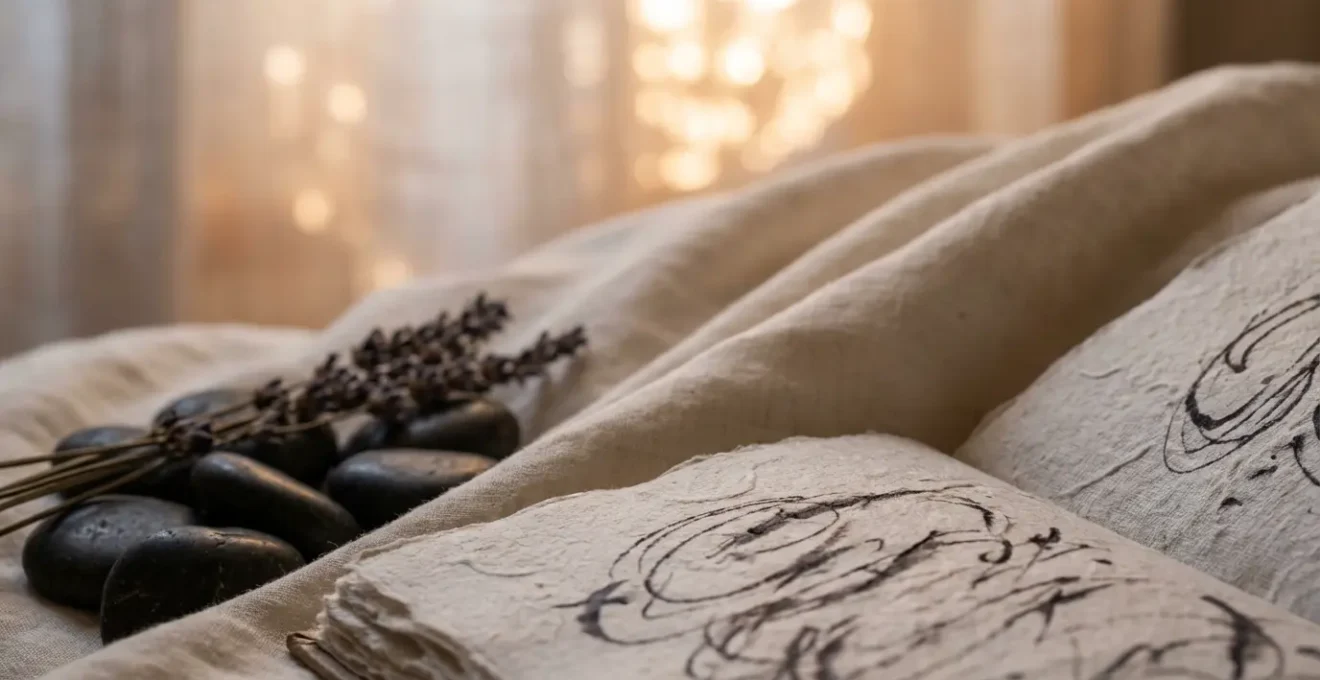
A “brain dump” is one of the most effective tools for these nights. As shown in the serene image above, having a journal by your bed allows you to externalize those racing thoughts, clearing your mental space for rest. Rather than fighting the influx of ideas, you give them a home outside your head. This simple act can be profoundly calming.
Here is a specific protocol for managing sleep during Air moon phases:
- Set a Digital Curfew: Turn off all screens at least one to two hours before bed. The blue light and constant information feed the Air energy.
- Create a “Brain Dump” Notepad: Keep a notepad and pen by your bed. Write down any racing thoughts, to-do lists, or brilliant ideas without judgment to get them out of your head.
- Engage the Senses with Earth Energy: Counteract the Air element with Earth. Give yourself a foot massage with grounding sesame oil, drink a warm, non-caffeinated tea like valerian root, or practice a five-minute body scan meditation, focusing on the weight of your body.
- Tailor Your Environment: For a Libra moon, focus on creating a harmonious and aesthetically pleasing bedroom. For a Gemini moon, remove all distracting books and devices. For an Aquarius moon, engage in light, non-stimulating fiction reading instead of technical or future-focused material.
By implementing this targeted approach, you can harness the brilliant mental energy of Air moons during the day and still enjoy deep, restorative sleep at night, creating a more balanced and productive experience of their transit.
Why Moon in Cancer Needs Privacy While Moon in Gemini Needs Constant Noise?
The Moon in Cancer needs privacy while the Moon in Gemini needs constant noise because their core methods of emotional processing are diametrically opposed, a difference rooted in their ruling planets and elements. Cancer, ruled by the Moon itself, is a Water sign that processes emotions internally and requires a safe, private “shell” to feel secure. Gemini, ruled by Mercury, the planet of communication, is an Air sign that processes externally through conversation, intellectual stimulation, and sound.
For a person with their natal moon in Cancer, or during the moon’s transit through Cancer, emotional security is paramount. Feelings are deep, sensitive, and often wordless. Like the crab that symbolizes the sign, they need to retreat into a protected space to digest their experiences. External noise and intrusion feel like a violation, disrupting the quiet inner world where they make sense of their feelings. Their comfort comes from nostalgia, familiarity, and the unspoken warmth of a secure home base.
In stark contrast, a person with a Gemini moon, or during the moon’s transit through Gemini, finds comfort in stimulus. Their emotional world is intrinsically linked to their intellectual one. An absence of sound or conversation can feel like a void, leading to restlessness and anxiety. They process feelings by talking them out, analyzing them, and gathering different perspectives. For them, “noise”—be it a podcast, music, or a lively debate—isn’t a distraction; it’s the very medium through which they connect and find their emotional equilibrium.
Recognizing this core dynamic allows for greater compassion and better self-care. It explains why one person recharges in total silence while another recharges by calling a friend. It’s a beautiful illustration of how astrology provides a language for our diverse emotional operating systems.
How to Set Up a ‘Decompression Zone’ in Your House for Water Sign Recovery?
To set up a “Decompression Zone” for Water sign recovery (Cancer, Scorpio, or Pisces), you must create a small, dedicated space that specifically caters to your sign’s unique emotional needs for comfort, privacy, or escape. This isn’t just a cozy corner; it’s an energetically sealed sanctuary designed to help you process emotions and recharge your sensitive system. Even a chair and a small table can become a powerful altar for your well-being.
Water signs are known for their deep empathy and emotional sensitivity, which means they easily absorb the energetic “static” of the world around them. A decompression zone acts as a filter, a place where you can wring out the day’s absorbed feelings and return to your own center. The key is to infuse the space with elements that make you feel safe, nurtured, and disconnected from external demands. The setup should be highly personal and tailored to your sign’s specific flavor of water.
Here is a guide to creating a zone tailored to each Water sign:
- For the Cancer Moon (Nostalgic Comfort): Your zone should feel like a warm hug. Use the softest blankets, surround yourself with cherished photos or family heirlooms, and have warm herbal teas like chamomile on hand. The goal is to evoke a sense of safety and belonging.
- For the Scorpio Moon (Private Intensity): Your space needs to be a private cave for transformation. Use dim lighting, burn transformative scents like incense or sage, and have a leather-bound journal for deep, uncensored reflection. Music should be intense and moving. The goal is privacy and depth.
- For the Pisces Moon (Magical Escape): Your zone should be an portal to another world. Use fairy lights, ethereal ambient music, and have art supplies or fantasy novels nearby. An essential oil diffuser with dreamy scents like ylang-ylang can enhance the mood. The goal is to facilitate a gentle escape from reality.
To complete your sanctuary, add a small tabletop fountain for auditory soothing and establish a transitional ritual, like washing your hands with cold water while visualizing stress washing away, before you enter the space. This signals to your mind and body that you are crossing a threshold into a sacred, restorative place.
Making this a daily practice, even for just 10-15 minutes, will dramatically improve your ability to navigate the world as a sensitive soul, especially during emotionally charged times like the full moon.
Key takeaways
- The moon’s influence on your body and emotions is a real, measurable phenomenon that impacts sleep and sensitivity, not just a mystical belief.
- Effective lunar self-care is not about following a rigid script, but about diagnosing your unique energetic state (overwhelmed, stuck, or depleted) and choosing a corresponding ritual.
- For highly sensitive people, especially Water signs, creating energetic boundaries is a non-negotiable form of self-care, as essential as physical hygiene.
Water Signs and Boundaries: Protecting Your Energy as a Highly Sensitive Cancer or Pisces
For highly sensitive Water signs like Cancer, Scorpio, and Pisces, protecting your energy with strong boundaries is not a luxury—it’s a fundamental necessity for emotional survival. Your innate empathy means you are an “energetic sponge,” naturally absorbing the feelings of those around you. Without conscious boundaries, you can easily become waterlogged with external emotions, leading to confusion, anxiety, and exhaustion.
This tendency is magnified during potent lunar phases. During a full moon, your own emotions are already intensified. When you add the amplified feelings of everyone else into the mix, it can become completely overwhelming. As noted in The Empath’s Guide to Lunar Cycles, the core challenge is that as an empath, you don’t just feel your own intensified emotions—you also absorb the heightened emotional state of everyone around you. This is why learning energetic boundary techniques is a non-negotiable skill for any Water sign seeking emotional stability.
These are not physical walls, but rather intentional, visualized shields that allow you to remain compassionate without becoming a dumping ground for others’ energy. They empower you to discern which feelings are yours and which are not. This practice of “emotional discernment” is the cornerstone of energetic sovereignty. It involves regularly checking in with yourself and asking, “Is this feeling mine?”
Action Plan: Your Energetic Boundary Toolkit
- Cloak of Invisibility: Before entering crowded or overwhelming environments, take a moment to visualize wrapping yourself in a shimmering, reflective silver cloak. Imagine it makes you energetically invisible to stray or draining emotions.
- Mirror Shield Technique: During a conversation that feels draining, visualize a large, clear mirror between you and the other person. See it reflecting their energy back to them with love, allowing you to listen without absorbing.
- Sacred Well Visualization: See yourself as a deep, ancient well filled with pure, clean water. Your boundaries are the strong, moss-covered stone walls of the well, protecting your sacred inner resources from contamination.
- Emotional Discernment Practice: When a strong emotion arises, pause and use this journal prompt: “If this feeling had a source outside of me, where would it originate?” This helps you trace and release what isn’t yours.
- Moon Phase Boundary Setting: Be extra diligent with these techniques in the days leading up to and during the full moon, when your energetic pores are most open. This is the time to say “no” more often and prioritize your peace.
To begin this practice, the next logical step is to start observing your own energy patterns with a simple journal, noting your feelings alongside the moon’s phase and sign. This awareness is the foundation upon which all other lunar syncing skills are built.
Frequently asked questions about Syncing With the Moon: A 28-Day Guide to Stabilizing Emotional Peaks
How much space do I need for a decompression zone?
Even a small corner with a comfortable chair and side table can work. The key is creating energetic boundaries, not physical size.
Can I share my decompression zone with others?
Water signs typically need private spaces. Consider setting specific alone-time hours or creating portable elements you can move to ensure privacy.
How often should water signs use their decompression zone?
Daily use is ideal, especially during full moons when emotional sensitivity peaks. Even 10-15 minutes can help reset emotional balance.