
Chronic pain and fatigue often stem from trauma physically stored in the body’s tissues, a level that talk therapy alone cannot reach. Somatic energy healing offers a body-first approach, not by manipulating mystical forces, but by helping your nervous system safely process and complete frozen stress responses. This guide explains the science-backed mechanisms behind this process, showing how you can release physical tension and reclaim your well-being by learning to understand your body’s unique language.
You’ve done the work. You’ve been to therapy, you’ve talked it all through, yet the persistent tightness in your shoulders, the unexplained knot in your stomach, or the chronic fatigue remains. Doctors run tests and find nothing, leaving you with a frustrating sense that “it’s all in your head.” This experience is profoundly common for individuals whose bodies are holding onto the physical imprint of past trauma. While talk therapy is invaluable for processing the narrative of our experiences, it often doesn’t access the pre-verbal, cellular memory where stress and fear are lodged.
The common approach is to either double down on cognitive strategies or to dismiss the physical symptoms as psychosomatic. But what if these symptoms aren’t just a side effect? What if they are the body’s primary language, a form of non-verbal communication? The true key isn’t to silence this language, but to learn how to listen. Somatic energy healing proposes a radical shift: instead of just talking about the past, we engage with its energetic signature still living in our physiology. This isn’t about magical thinking; it’s about neurobiology. It’s about providing the nervous system with the right conditions to finally complete the self-protective responses that were frozen in time.
This article will guide you through the core principles of this body-first approach. We will explore how specific emotional stressors manifest as physical pain, differentiate between popular healing modalities, and provide practical tools to support your nervous system. You will learn to reframe unsettling post-session symptoms as progress and develop somatic boundaries, empowering you to move from a state of chronic defense to one of genuine safety and vitality.
To navigate this comprehensive exploration, the following summary outlines the key areas we will cover, from the connection between your emotions and physical pain to practical, real-world applications of chakra balancing for improved well-being.
Summary: A Somatic Journey to Releasing Bodily Trauma
- Why Your Lower Back Pain Might Be Connected to Financial Fear?
- How Does Distant Reiki Work If the Healer Is in Another Country?
- Reiki vs. Pranic Healing: Which Is Better for Acute Physical Pain?
- The Detox Error: Panicking When Symptoms Worsen After a Session
- How to Support Your Nervous System in the 24 Hours After a Healing?
- Why You Feel Everyone Else’s Emotions Entering a Room?
- Why Fire Signs Are More Prone to Adrenal Fatigue Than Others?
- Chakra Balancing for Real Life: Fixing Communication Issues via the Throat Chakra
Why Your Lower Back Pain Might Be Connected to Financial Fear?
Chronic lower back pain, especially when medical scans show no structural cause, is a classic example of a somatic dialogue. From a bio-energetic perspective, this area is governed by the Root Chakra (Muladhara), our center for survival, stability, and security. When you experience persistent financial fear or instability, your nervous system enters a low-grade, chronic fight-or-flight-or-freeze state. This isn’t an abstract concept; it has direct physical consequences. The body clenches the deep muscles of the pelvic floor, hips, and lower back—the very foundation of your physical structure—in a primal attempt to “ground” and protect itself.
This sustained muscular tension restricts blood flow, shortens fascia, and creates a constant, dull ache. Energy healing practitioners find that fear and financial concerns block the root chakra, manifesting as chronic lower back pain. This “blockage” is the energetic signature of that unreleased tension. Your pain isn’t a malfunction; it’s a message. It’s your body’s way of telling you, “I do not feel safe. Our foundation feels threatened.” The healing process, therefore, involves speaking this language back to the body through grounding practices that signal safety to the nervous system.
To understand how this energy is held in the body, it’s helpful to visualize the source. The image below illustrates the concept of this energy center at the base of the spine, the focal point for these survival-based tensions.

As depicted, the energy is not just a point but a radiating field. Addressing the pain requires working with this entire pattern, not just the symptomatic muscles. By consciously engaging in practices that nourish this area, you send a powerful signal of security directly to your primal brain, allowing the deeply held muscular armoring to finally release. This begins the process of unwinding the physical manifestation of your fear.
How Does Distant Reiki Work If the Healer Is in Another Country?
The concept of distant healing often challenges our classical, Newtonian view of the world. How can a practitioner’s intention affect someone miles away? The answer lies in understanding what is actually being “healed.” We are not sending a physical substance across space. Instead, we are working with the non-local nature of trauma and consciousness. As the pioneering somatic therapist Dr. Peter A. Levine states, healing is about engaging with the body’s innate intelligence.
The body is always ready to tell its story through a voice that doesn’t use words.
– Dr. Peter Levine, Psychotherapy.net Interview
Trauma, from a somatic perspective, is not the event itself, but the energy that got frozen in the nervous system when a self-protective response was thwarted. This frozen energy—whether it’s from an accident, abuse, or ongoing fear—has a specific energetic signature. This signature is an informational pattern, not a physical object bound by location. According to the principles of quantum entanglement, which suggest that particles can be linked and instantaneously affect one another regardless of distance, consciousness and intention may operate in a similar, non-local field.
In a distant Reiki session, the healer acts as a tuning fork. By focusing their intention, they create a coherent and compassionate energetic field. Your body, with its innate drive to heal, can “attune” to this resonant frequency. This process doesn’t “put” energy into you; rather, it provides your nervous system with a stable, safe signal that reminds it of its own capacity for regulation. This supportive resonance can help the body feel safe enough to begin the process of “thawing” that frozen traumatic energy and completing the interrupted physiological cycles, no matter where you are physically located.
Reiki vs. Pranic Healing: Which Is Better for Acute Physical Pain?
When dealing with acute physical pain—like a recent sprain, a migraine, or post-surgical discomfort—the goal of energy healing is to reduce inflammation, promote circulation, and calm the local nerve endings. Both Reiki and Pranic Healing are effective, but they operate with different methodologies, making them suitable for different aspects of pain relief. It’s less about which is “better” and more about understanding their distinct approaches to somatic intervention.
Reiki is often described as a gentle, holistic system of “laying on of hands.” It works by channeling universal life force energy in a very soft, passive, and encompassing way. For acute pain, Reiki is excellent for overall nervous system regulation. It soothes the body’s global stress response, which is often a major amplifier of pain perception. Think of it as creating a warm, healing “energetic bath” that reduces the body’s alarm signals, allowing its natural healing processes to take over. It’s deeply calming and ideal for pain intertwined with high anxiety or shock.
This visual contrast helps conceptualize the different qualities of energy involved. Reiki is the soft, diffused blue light, while Pranic Healing is the focused, white beam.
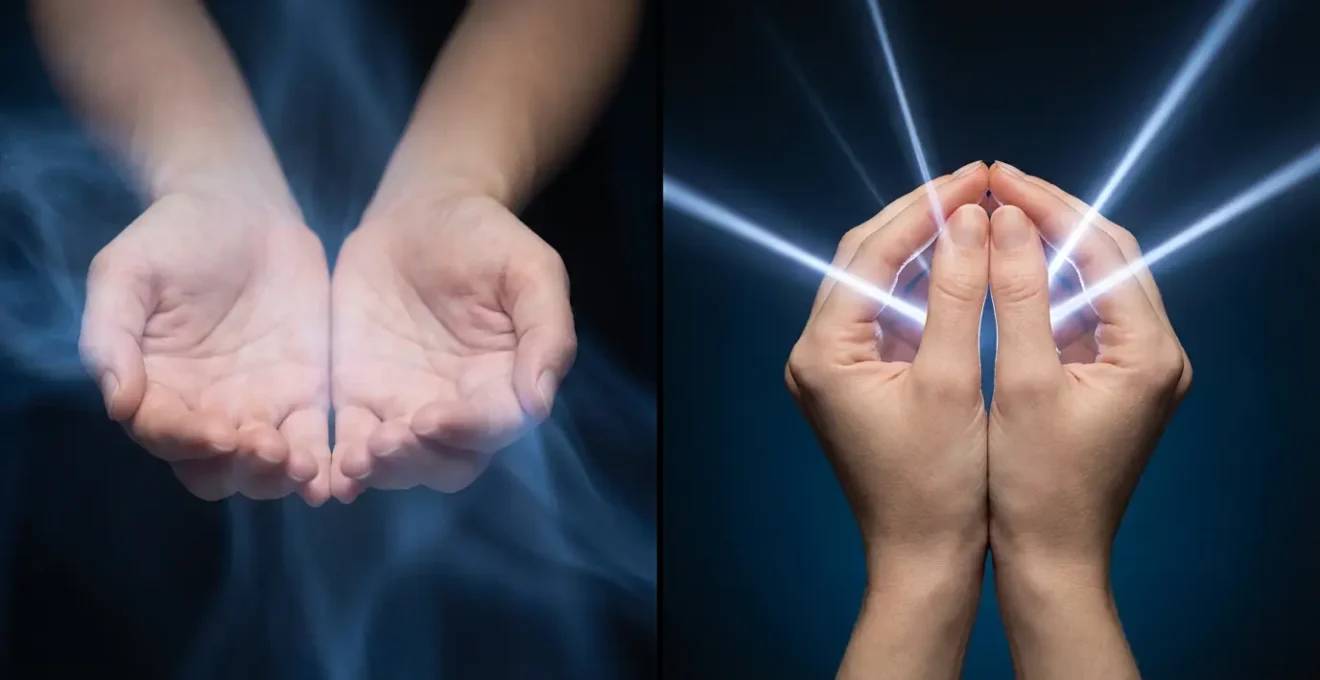
Pranic Healing, conversely, is a more active and diagnostic system. It involves “scanning” the energy body to locate areas of congestion (dirty or diseased energy) and depletion. The protocol is to first remove this congested energy and then project fresh, targeted prana (life force) into the affected area. For acute pain, this can be incredibly direct. A practitioner might specifically “clean” the energy of a sprained ankle and “energize” it with specific color pranas to accelerate tissue repair. This approach is more like energetic surgery—precise, targeted, and methodical. The effectiveness of such body-based work is supported by a growing understanding that research on body-based healing shows it helps release trauma stored at cellular and genetic levels.
The Detox Error: Panicking When Symptoms Worsen After a Session
One of the most misunderstood phenomena in somatic healing is the “healing crisis.” You leave a session feeling calm and integrated, only to wake up the next day feeling anxious, irritable, weepy, or even experiencing a temporary flare-up of your physical symptoms. The immediate reaction is often panic: “It didn’t work,” or “It made me worse.” This is what I call the “Detox Error”—misinterpreting a sign of nervous system processing as a sign of failure.
This is not a “detox” in the sense of flushing out physical toxins. It is a nervous system “thaw.” During a traumatic event, a massive amount of survival energy (adrenaline, cortisol) is mobilized for a fight or flight response. If that response is blocked, the energy freezes in the body. A successful somatic session creates enough safety for that frozen energy to finally be released and metabolized. As this happens, physical sensations such as tingling, warmth or a sense of energy may occur, along with the original emotions (fear, anger, grief) that were suppressed. You are not getting worse; you are finally *feeling* the backlog of unfelt experience. This is a crucial sign of progress.
The key is to manage this phase with awareness and self-compassion, rather than fear. Instead of resisting the sensations, the goal is to create a container for them, allowing the cycle to complete without re-traumatizing your system. Having a clear protocol can make the difference between a terrifying experience and a profoundly healing one.
Your action plan: The Three-Day Rule Protocol for Post-Session Turbulence
- Day 1 (Observation & Calming): Use a weighted blanket to provide deep pressure input and calm the nervous system. Practice the “Voo” sound (a low, vibrational hum) to gently stimulate and tone the vagus nerve.
- Day 2 (Dialogue & Inquiry): Journal with the specific prompt: “What does this sensation want me to know?” This shifts you from being a victim of the symptom to being in a respectful dialogue with your body’s wisdom.
- Day 3 (Tracking & Integration): Notice if the symptoms have shifted in location, intensity, or quality (e.g., from a sharp pain to a dull ache, or from anxiety to sadness). These shifts are definitive signs of energy moving and integrating, not a sign of injury.
How to Support Your Nervous System in the 24 Hours After a Healing?
A somatic energy healing session is like performing a major software update on your nervous system. The 24 hours that follow are a critical window for integration. What you do during this time can either solidify the gains or inadvertently disrupt the delicate process of re-wiring. The primary goal is not to “hold onto the feeling” from the session, but to create a stable, low-stimulation environment so your body can fully anchor the new state of regulation.
The most common mistake is immediately jumping back into a high-stress, high-input life. Answering a flood of emails, scrolling through social media, or tackling a complex problem forces your nervous system right back into the hypervigilant patterns it just began to release. The key is to consciously introduce a period of “energetic convalescence.” This involves reducing external input so your internal system has the resources to do its work. Think of it as protecting a newly sprouted seed from a storm.
Specific actions can create this protective buffer. In the first few hours, implementing a “No-Input Window” is crucial—no news, no social media, no difficult conversations. This allows your system to settle. Following that, focus on nourishment that is energetically grounding. Foods like root vegetables, warm broths, and healthy fats help anchor your energy back into your body, counteracting any feelings of spaciness. This repeated, rhythmic process of gentle care helps you develop a greater capacity to handle stress and stay present. Finally, before sleep, a simple “Energetic Closing Ceremony”—placing your hands on your heart and belly and silently thanking your body for its work—acknowledges the process and seals the integration with intention.
Why You Feel Everyone Else’s Emotions Entering a Room?
For many, being an “empath” feels like a psychic burden—an uncontrollable influx of other people’s emotional states that is exhausting and overwhelming. From a somatic perspective, this experience is less about a mystical gift and more about a lack of somatic boundaries. A healthy energetic boundary is not a wall; it’s a semi-permeable membrane, like a cell wall, that allows for connection and exchange without a total loss of self. When this boundary is weak, often due to early life trauma where it was unsafe to have one’s own space, our nervous system becomes hyper-attuned to the environment as a survival mechanism.
You aren’t just “feeling” their emotions; your mirror neuron system and autonomic nervous system are physically resonating with the energetic signatures of others. You feel their anxiety in your stomach or their anger as tension in your jaw because your body doesn’t have a clear sense of where “you” end and “they” begin. The solution, therefore, is not to build a higher wall, but to strengthen the container of your own body. This is a physical, felt sense of self-possession that is cultivated from the inside out.
This process of building somatic awareness, often called “tracking,” connects mind and body. The illustration below captures this idea of a personal energetic field that is distinct yet connected to the environment.
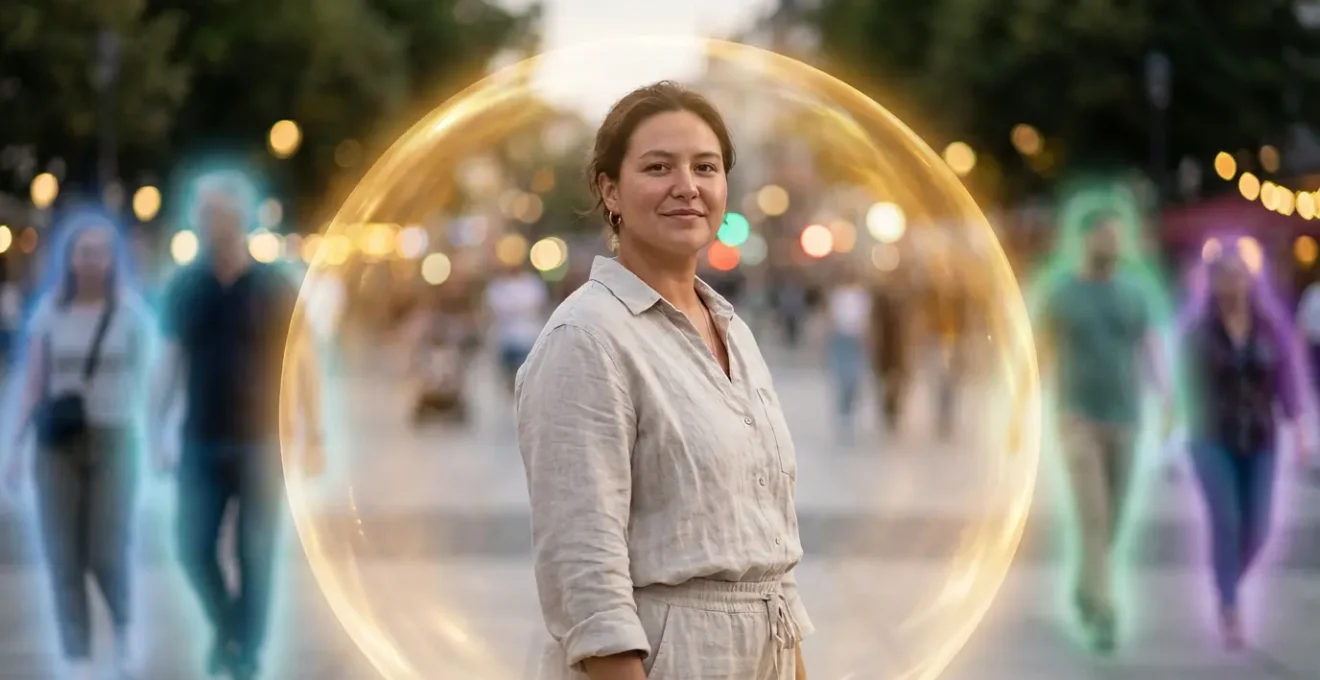
The key practice is to constantly bring awareness back to your own physical sensations. An effective exercise involves consciously engaging your core muscles (the solar plexus area, our center of personal power) when you enter a new space. This physical tension creates a tangible somatic anchor. Then, when you feel a wave of emotion, you can consciously ask, “Is this mine?” The physical anchor in your core gives your nervous system a clear point of reference for “self,” making it easier to differentiate and release what is not yours.
Why Fire Signs Are More Prone to Adrenal Fatigue Than Others?
In astrology, the fire signs—Aries, Leo, and Sagittarius—are characterized by their passion, drive, and high-energy output. They are the initiators and performers of the zodiac, constantly pushing forward with enthusiasm. While this gives them incredible dynamism, it also carries a significant physiological risk: a predisposition to adrenal fatigue. This isn’t just a colorful metaphor; it’s a direct correlation between an archetypal energy pattern and nervous system function.
The adrenal glands, which sit atop the kidneys, are central to our stress response. They produce cortisol and adrenaline, the hormones that fuel our “get up and go” energy. The natural inclination of fire signs is to live in a state of high activation. They thrive on challenge, excitement, and action. The downside is that their baseline level of cortisol output is often chronically elevated. They are constantly “on,” burning through their energetic reserves at an accelerated rate. Over time, this can exhaust the adrenal system, leading to the classic symptoms of burnout: deep fatigue, an inability to cope with stress, brain fog, and a “tired but wired” feeling at night.
From an energetic standpoint, the adrenal glands are closely linked to the Root Chakra’s survival functions. As energy healing research indicates, an imbalanced Muladhara chakra could lead to adrenal fatigue, causing stress, anxiety, and fear. For fire signs, the imbalance isn’t from fear (a freeze response) but from chronic over-activation (a perpetual fight/flight response). The key to healing is not more stimulation, but a conscious cultivation of the opposing elements: Water (rest, fluidity, emotional processing) and Earth (grounding, stability, rest). This involves implementing mandatory rest periods, engaging in restorative practices like yin yoga or swimming, and walking barefoot on the earth to help the nervous system discharge excess energy and come back to a sustainable baseline.
Key takeaways
- Somatic healing addresses trauma by working with the body’s nervous system, not just the mind’s narrative.
- Physical symptoms like chronic pain are often a “somatic dialogue”—a message from your body about stored stress.
- A “healing crisis” where symptoms temporarily worsen is a positive sign of the nervous system processing and releasing old trauma.
Chakra Balancing for Real Life: Fixing Communication Issues via the Throat Chakra
The concept of “balancing the throat chakra” can sound abstract, but its real-world application is profoundly practical, especially for anyone struggling with communication. The Throat Chakra (Vishuddha) is the energetic center for expression, authenticity, and speaking your truth. When it’s “blocked,” the somatic manifestation is not a mystical vapor but tangible physical tension in the jaw, neck, and shoulders. This is the body’s armor, built from a lifetime of swallowing your words, holding back tears, or clenching your jaw in unspoken frustration.
These communication issues often have a deeper root in the Sacral Chakra (Svadhisthana), our center for emotions, creativity, and feeling. If we don’t feel safe to *feel* our emotions (sacral), we can’t possibly *express* them authentically (throat). The energy cannot flow. Therefore, fixing communication problems isn’t just about learning to “speak up.” It’s a somatic process of unlocking the physical armor that is holding the unexpressed energy. Techniques like freeform dance or simply shaking out your limbs can be powerful ways to access and release this stored tension.
A simple yet powerful exercise can help re-establish this crucial sacral-to-throat connection. Place one hand on your lower belly and the other on your throat. Begin to hum, feeling the vibration resonate in both hands. This physically links the two centers. Then, practice a few rounds of Lion’s Breath (inhaling through the nose, then exhaling forcefully through the mouth with your tongue out, making a “ha” sound) to dramatically release jaw tension. Follow with slow, gentle neck rolls. This isn’t just stretching; it is a conscious act of telling your body it is now safe to let go of the tension it has held for so long, creating the physical space necessary for your true voice to emerge.
By learning to listen to the body’s language and work with its energetic systems, you can move beyond the limitations of purely cognitive approaches. The next logical step is to begin applying these principles through a personalized somatic exploration with a qualified practitioner who can guide you in safely releasing these stored patterns.