
A child’s birth chart is more than cosmic curiosity; it’s a psychological blueprint for their innate temperament and needs.
- Astrology provides a language to understand a child’s core emotional needs (Moon sign), cognitive style (Mercury), and natural energy (elements).
- Connecting these astrological insights to principles of responsive parenting allows you to offer tailored support that fosters security and growth.
Recommendation: Use this framework not to predict the future, but to create a nurturing environment that honors your child’s authentic self from the very beginning.
As a new parent, you’ve likely spent countless hours observing your child, marveling at their emerging personality. You might wonder why one baby is soothed by constant cuddling while another is perfectly content watching a ceiling fan. You may notice one toddler expresses frustration with fiery intensity, while another withdraws into a quiet shell. Conventional parenting advice often offers one-size-fits-all solutions, which can feel frustratingly inadequate when they don’t resonate with your child’s unique character.
Many parents turn to popular astrology, looking at their child’s sun sign for clues. While this can be a fun starting point, it’s like reading only one chapter of a rich and complex story. The real value lies in understanding the entire natal chart—a detailed map of the sky at the exact moment of birth. This is not about fortune-telling or putting your child in a box. Instead, think of it as a psychological blueprint, a profound tool for understanding their innate temperament, emotional wiring, and learning style.
The shift in perspective is subtle but transformative. What if the key to harmonious parenting wasn’t about enforcing a standard set of rules, but about adapting your approach to your child’s pre-wired needs? This guide will walk you through how to interpret key elements of your child’s natal chart through the lens of child psychology. We will translate cosmic language into practical, actionable strategies that empower you to provide the specific, responsive care your child needs to feel seen, understood, and secure.
In the following sections, we will explore the foundational elements of a birth chart and apply them to real-world parenting scenarios, from soothing an infant to negotiating with a teenager. This journey will equip you with a deeper level of empathy and a more nuanced toolkit for nurturing your child’s incredible potential.
Summary: A Parent’s Guide to the Stars
- Beyond Sun Signs: Why Your Zodiac Profile Is More Than Just Your Birthday
- Why a Water Sign Baby Needs More Physical Reassurance Than an Air Sign Baby?
- Why Moon in Cancer Needs Privacy While Moon in Gemini Needs Constant Noise?
- How to Adapt Your Teaching Style for a Child With Mercury in Pisces?
- Why You Feel Everyone Else’s Emotions Entering a Room?
- Strict Boundaries vs. Open Negotiation: What Works for a Fire Sign Teenager?
- When to Expect Independence Spikes Based on Your Child’s Jupiter Cycles?
- The Projection Error: Trying to Live Your Unfulfilled Dreams Through Your Child’s Chart
Beyond Sun Signs: Why Your Zodiac Profile Is More Than Just Your Birthday
When someone asks, “What’s your sign?” they’re referring to your Sun sign, determined by your birth date. While the Sun represents your core identity and life force, it’s only one actor on a much larger stage. A complete natal chart is a rich tapestry woven from the positions of the Sun, the Moon, and all the planets at the precise moment of birth. Understanding this complexity is the first step toward using astrology as a meaningful parenting tool.
Each planet and point in the chart represents a different facet of your child’s psyche. If the Sun is the hero of their story, the other placements are the supporting cast, each with a crucial role to play in their development. The Moon sign, for example, governs their emotional world, their instincts, and how they need to be nurtured. The Rising sign (or Ascendant) is the social mask they wear, shaping how others see them and how they approach the world. Mercury dictates their communication and learning style, while Mars reveals their drive and how they express anger.
As Cafe Astrology beautifully puts it, seeing the chart as a collection of characters helps to understand its dynamic nature:
The Birth Chart as a Cast of Characters: The Sun is the Hero, the Moon is the inner Child, Mercury is the Messenger, Mars is the Warrior, and the Ascendant is the Mask they wear.
– Cafe Astrology, Children & Parenting Astrology
Ignoring these other players is like trying to understand a film by only watching the lead actor’s scenes. For a parent, learning about the Moon, Mercury, and Rising sign provides a much more nuanced and accurate portrait of their child’s inner world. It allows you to move from broad generalizations to a deeply personalized understanding of what makes your child feel safe, stimulated, and loved.
This foundational knowledge is the key to unlocking a more empathetic and effective parenting approach, one that honors every part of your child’s unique personality.
Why a Water Sign Baby Needs More Physical Reassurance Than an Air Sign Baby?
One of the most immediate ways a natal chart can inform parenting is through the elements: Fire, Earth, Air, and Water. Each element describes a fundamental type of energy and consciousness. For an infant, whose needs are primal and non-verbal, the elemental balance in their chart speaks volumes about their core comforts. This is particularly evident when comparing Water signs (Cancer, Scorpio, Pisces) and Air signs (Gemini, Libra, Aquarius).
Water signs are driven by emotion and feeling. For a Water sign baby, the world is experienced through an emotional and sensory lens. They are like little sponges, absorbing the emotional atmosphere around them. Their primary need is for emotional security, which translates directly to physical closeness, cuddling, and consistent, gentle reassurance. An Air sign baby, by contrast, is wired for mental stimulation and social connection. Their world is one of thoughts, ideas, and interactions. They are often highly curious, fascinated by mobiles, sounds, and faces. While they also need love and comfort, their need for mental engagement is just as strong as their need for physical touch.
A Water sign baby might cry because they feel an unnamed anxiety and need to be held to regulate their nervous system. An Air sign baby might cry out of boredom and be instantly soothed by a change of scenery or a new sound. Understanding this distinction isn’t about labeling; it’s about learning your baby’s unique language of needs and responding effectively. This is the heart of what psychologists call “responsive caregiving”—the ability to tune in, interpret signals accurately, and act promptly to meet a child’s needs. This builds a secure attachment, which is the foundation for healthy emotional development.
By recognizing whether your baby is asking for a cuddle or for a new toy to look at, you are already practicing a deeply attuned form of parenting that honors their innate temperament.
Why Moon in Cancer Needs Privacy While Moon in Gemini Needs Constant Noise?
As a child grows, their emotional landscape becomes more complex. The Moon sign, which governs feelings, security, and the subconscious, becomes a critical key to understanding their inner world. It reveals what your child needs to feel emotionally safe and how they recharge. The contrast between a Moon in a Water sign like Cancer and a Moon in an Air sign like Gemini provides a perfect illustration of how different these needs can be.
A child with the Moon in Cancer has a deep, instinctual need for a safe haven. Their emotional well-being is tied to home, family, and a sense of belonging. After a long day at school, they need to retreat into a private, cozy space to process their feelings. For them, a bedroom isn’t just a place to sleep; it’s a sanctuary. Forcing them into social activity when they need to decompress can be deeply unsettling. They recharge through quiet, solitude, and the comfort of the familiar.

Conversely, a child with the Moon in Gemini thrives on mental stimulation and variety. Their emotional state is often processed externally, through talking, learning, and social interaction. For them, quiet can feel like isolation. They need to talk about their day, jump from one activity to another, and have background noise like music or an audiobook. Their “safe space” is less a physical location and more an environment rich with information and connection. After school, their way of recharging might be to call a friend or dive into a new project, not to sit alone in their room.
Understanding your child’s Moon sign allows you to design their environment and routines to support their emotional health. It’s not about one being “sensitive” and the other “outgoing,” but about recognizing two fundamentally different ways of processing emotion.
- For a Cancer Moon, create a cozy nook with soft blankets and dim lighting, and establish a predictable “quiet time” ritual after school.
- For a Gemini Moon, ensure their space has easy access to books, games, and a way to communicate, providing multiple activity options to prevent boredom.
By honoring these differences, you teach your child that their emotional needs are valid and give them the tools to self-regulate effectively as they grow.
How to Adapt Your Teaching Style for a Child With Mercury in Pisces?
Beyond emotional needs, a natal chart offers profound insights into a child’s cognitive style. The planet Mercury governs how we think, communicate, and learn. Its sign placement reveals the unique way your child’s mind processes information. A child with Mercury in a logical Earth sign like Virgo will learn very differently from one with Mercury in an intuitive Water sign like Pisces.
A child with Mercury in Pisces has a mind that operates on imagination, empathy, and non-linear connections. They don’t think in straight lines or logical sequences. Instead, their thoughts are fluid, impressionistic, and deeply intertwined with their emotions. Asking them to learn through rote memorization or rigid outlines can be incredibly frustrating for them. They absorb information through stories, metaphors, art, and music. Their greatest strength is their creativity and their ability to see the “big picture” in a holistic, intuitive way.
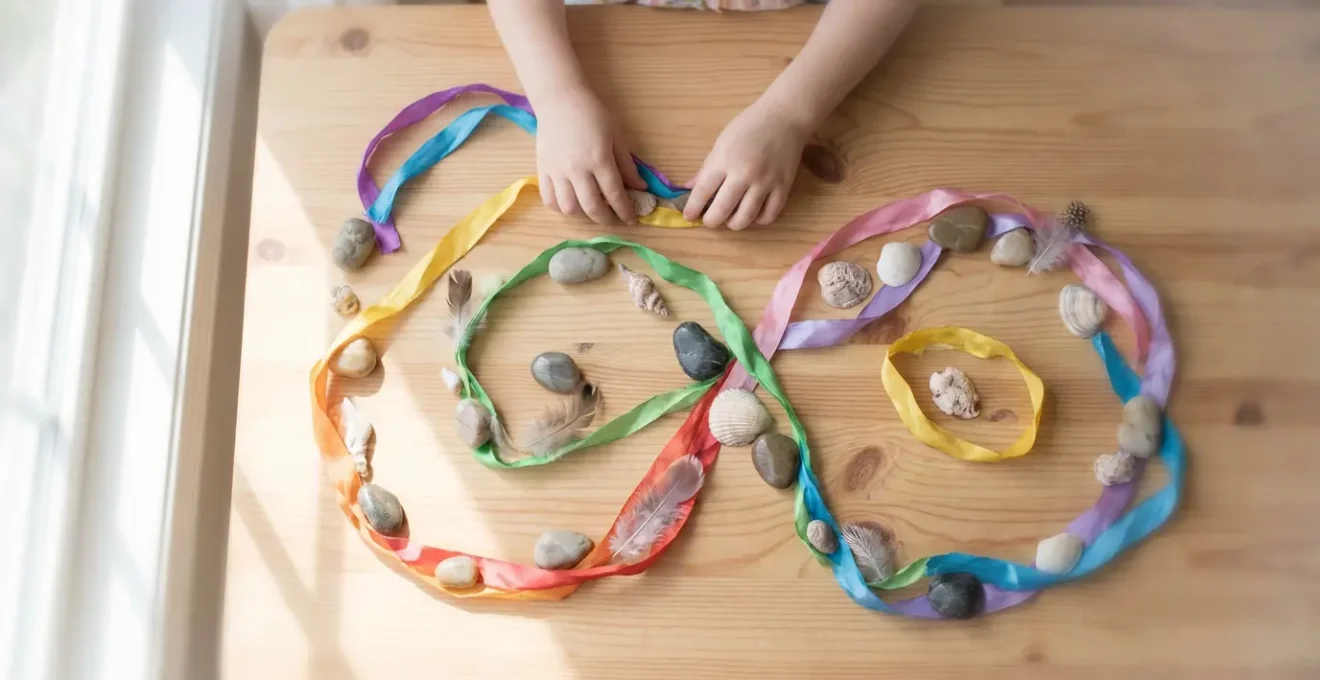
To help a Mercury in Pisces child thrive academically, you must engage their imagination. As noted in an analysis on astrology for parents, children with Mercury in Water signs often need help thinking with pure logic because their emotions naturally blend with their thoughts. Instead of demanding linear notes, encourage them to create a mind map with drawings and colors. When teaching history, frame it as a story with compelling characters. In science, use analogies from nature. Their learning is an emotional and creative experience, not just a cognitive one.
This approach doesn’t mean abandoning structure entirely. It means presenting structure in a way that appeals to their artistic and empathetic nature. They need to feel the subject to understand it. By adapting your teaching style to their dreamy, associative mind, you’re not just helping them get better grades; you’re honoring their unique cognitive gifts and teaching them that their way of seeing the world is a strength, not a weakness.
This empowers them to build confidence in their own intellect and develop a lifelong love of learning that works with their mind, not against it.
Why You Feel Everyone Else’s Emotions Entering a Room?
Some children seem to be born with an invisible set of antennae, exquisitely tuned to the emotional frequencies of everyone around them. They walk into a room and can instantly sense if there’s tension, sadness, or joy. From a psychological perspective, this is known as high temperamental reactivity—a biological predisposition to react more intensely to emotional and sensory stimuli. In astrology, this trait is often seen in charts with a strong emphasis on Water elements or a prominent Neptune or Moon. These children are not being “too sensitive”; they are simply wired to feel more.
This heightened sensitivity is a double-edged sword. It can be the source of incredible empathy, compassion, and creativity. However, without the tools to manage it, it can also lead to emotional overwhelm, anxiety, and difficulty distinguishing their own feelings from others’. It’s a significant factor to consider, as research shows that more than 20 percent of children aged 3-17 in the United States have at least one diagnosed mental, emotional, or behavioral condition, many of which are related to emotion regulation.
The Impact of Temperament and Parenting Stress
The connection between a child’s innate temperament and their well-being is backed by clinical research. For instance, a 2024 study on preschool children found that high temperamental reactivity was directly linked to challenges with emotion regulation and higher levels of anxiety and aggression. Crucially, the study highlighted that the negative impact was significantly magnified when the child’s sensitivity was combined with high levels of parenting stress. This underscores the critical importance of a calm, responsive parenting environment for children who are naturally more reactive to their surroundings.
For parents of a highly sensitive child, the primary goal is to teach them emotional boundary-setting. Help them name their feelings (“It seems like you’re feeling sad right now. Is that your sadness, or did you pick it up from someone else?”). Teach them grounding techniques, like focusing on their breath or feeling their feet on the floor. Most importantly, create a home environment that is a predictable and calm sanctuary where they can discharge the emotional static they’ve collected throughout the day. By acknowledging their sensitivity as a real trait, you empower them to navigate the world without being constantly overwhelmed by it.
Your validation teaches them that their sensitivity is not a flaw, but a part of their unique makeup that can be managed and even celebrated.
Strict Boundaries vs. Open Negotiation: What Works for a Fire Sign Teenager?
As children enter adolescence, the parenting dynamic shifts from direct caregiving to guidance and negotiation. This is especially true for teenagers with a strong Fire sign presence (Aries, Leo, Sagittarius) in their charts. Fire signs are defined by their need for action, freedom, and self-expression. A heavy-handed, authoritarian approach (“Because I said so”) will almost always backfire, leading to power struggles and rebellion. They need to feel a sense of agency and respect.
However, this doesn’t mean a complete absence of rules. The key is to frame boundaries in a way that honors their core need. An Aries teenager needs to conquer a challenge. A Leo needs their pride and authority to be respected. A Sagittarius needs to understand the logic and fairness behind a rule. As parenting advice on TODAY.com suggests, an honest relationship with a Sagittarius child allows for a strong bond, so long as they know where the firm limits are. A negotiation style that works for one will not work for all, as each seeks a different form of validation.
The following table outlines how to adapt your approach based on their specific Fire sign, turning potential conflicts into opportunities for mutual respect. As a parenting guide based on the zodiac highlights, understanding these nuances is key.
| Fire Sign | Core Need | Effective Approach | What to Avoid |
|---|---|---|---|
| Aries | To feel they won a challenge | Frame rules as challenges to conquer | Authoritarian control without explanation |
| Leo | Pride and authority respected | Use phrases like ‘I trust your judgment on this’ | Public criticism or humiliation |
| Sagittarius | Understanding the ‘why’ behind rules | Explain reasoning and fairness | Arbitrary rules without logic |
By using these strategies, you are not giving up your authority as a parent. Instead, you are channeling their fiery energy constructively. You are teaching them that their desire for independence is valid, but that it comes with responsibility. This approach fosters respect rather than resentment and helps them develop the self-regulation skills they will need as adults, all while preserving the parent-child connection during the often-turbulent teenage years.
It transforms the dynamic from a battle of wills into a collaborative effort toward growth and independence.
When to Expect Independence Spikes Based on Your Child’s Jupiter Cycles?
While much of the natal chart describes static personality traits, some elements point to predictable developmental timelines. The planet Jupiter, associated with growth, expansion, and learning, follows a roughly 12-year cycle around the zodiac. Each time Jupiter returns to the position it occupied at a person’s birth (an event called a “Jupiter Return”), it marks a major developmental leap and a surge in the desire for independence and new experiences.
For a child, the first Jupiter Return is a pivotal moment. As astrologer Alex Trenoweth’s research shows, this occurs around age 11-12 and coincides with major life changes like puberty, the transition to middle or secondary school, and exposure to a wider range of social influences. This is not just a coincidence; it’s a cosmic and developmental alignment. During this time, your pre-teen is driven by an innate urge to expand their horizons, question authority, and form their own worldview. They are no longer just a part of the family unit; they are beginning to see themselves as independent individuals.
Understanding this cycle can help parents reframe what might otherwise seem like sudden rebellion or defiance. This isn’t your child rejecting you; it’s their Jupiterian impulse for growth kicking into high gear. The second Jupiter Return occurs around age 23-24, often marking the true beginning of adult independence, as a young person gains confidence as an agent in their own life. Knowing these milestones are coming allows you to prepare. Instead of clamping down on their newfound desire for freedom at age 12, you can create safe opportunities for them to explore it. You can engage them in discussions about bigger-picture ideas and give them more responsibility.
By working with these natural developmental surges, you can guide your child’s journey toward independence with more wisdom, patience, and understanding, strengthening your bond in the process.
Key takeaways
- A child’s natal chart is a nuanced psychological blueprint, not just a sun sign.
- Understanding your child’s elemental and Moon sign needs allows for tailored, responsive care that builds emotional security.
- Adapting teaching and discipline styles to your child’s specific astrological placements (like Mercury or Fire signs) prevents conflict and fosters respect.
The Projection Error: Trying to Live Your Unfulfilled Dreams Through Your Child’s Chart
Perhaps the most advanced and essential application of parental astrology is turning the lens back on ourselves. It’s natural to have hopes and dreams for our children, but there is a fine line between supporting their potential and unconsciously projecting our own unfulfilled desires onto them. A child’s natal chart, with all its brilliant potential, can become a screen onto which we project our own “what ifs.” You might see a strong Mars in your child’s chart and push them toward sports you wished you’d played, or a creative Venus and steer them toward an artistic career you abandoned.
This is the projection error, and it is a subtle trap. It stems from love, but it can inadvertently stifle a child’s authentic self. The goal of using your child’s chart is to understand *them*, not to find a second chance for *you*. Acknowledging and managing this tendency is a profound act of love and respect. It requires self-awareness and the courage to separate your own life story from theirs. The chart’s purpose is to illuminate your child’s path, not to reroute it toward your own past.
Engaging in regular self-reflection is key to maintaining this healthy boundary. By becoming aware of your own chart, your own strengths, and your own unfulfilled dreams, you can more easily recognize when you are placing undue pressure on your child. This conscious awareness allows you to celebrate their unique gifts, even—and especially—when they are different from your own. True support means watering the specific plant you have, not trying to force it to become a different flower.
A Gentle Checklist for Projection Awareness
- Identify your passions: Notice which areas of your child’s development you feel most emotionally invested in. Is it their academics, athletics, or social life?
- Reflect on your own story: Gently ask yourself if your strong expectations in that area align with your child’s genuine interests or with your own past wishes and regrets.
- Listen more than you direct: Practice observing your child’s natural inclinations without judgment. What do they gravitate toward when given free choice?
- Separate your feelings: When you feel a strong emotional reaction (like disappointment or pride) to their activities, pause and question if that feeling is about them or about you.
- Seek loving feedback: Ask a co-parent or a trusted friend if they’ve ever observed you pushing a particular path for your child, creating a safe space for honest reflection.
By clearing away your own projections, you create the space for your child’s true self to emerge, guided by their own unique cosmic blueprint.
Frequently Asked Questions on Natal Astrology for Parents
Why is the Moon sign important for understanding my child?
The Moon sign governs emotional needs, early development, and how a child gives and receives care. It’s especially significant during the first seven years when their emotional foundation and nervous system are developing, making it a crucial key to understanding your young child’s sense of security.
How can I find my child’s complete birth chart?
You can generate a free, complete birth chart by entering your child’s birth information—including the exact time, date, and location—at reputable websites like astro.com. This will show you their complete cosmic snapshot with all planetary positions needed for a deeper understanding.
What’s the difference between Sun sign and Rising sign in children?
The Sun sign represents your child’s core personality, ego, and life force. The Rising sign (also called the Ascendant) indicates their outward personality, the “mask” they present to the world, and often points to their natural skills, talents, and how others perceive them upon first meeting.