Horoscopes
Horoscopes have evolved far beyond the brief newspaper columns many people remember from decades past. Today, they represent a diverse landscape of astrological guidance, ranging from quick daily affirmations to sophisticated analyses of planetary movements tailored to individual birth charts. Whether you’re someone who checks your sun sign forecast over morning coffee or you’re ready to explore the nuanced world of personal transits, understanding the different types of horoscopes and how to use them effectively can transform them from casual entertainment into meaningful tools for self-reflection and intentional living.
This comprehensive exploration will guide you through the practical applications of horoscopes, help you distinguish reliable sources from questionable ones, and teach you how to engage with astrological guidance in a balanced, empowering way. You’ll discover the fundamental differences between generic zodiac forecasts and personalized readings, and learn how tracking planetary transits can offer deeper insights into timing and personal growth cycles.
How Daily Horoscopes Can Enhance Your Daily Routine
Daily horoscopes serve a purpose that extends beyond simple fortune-telling. When approached thoughtfully, they function as intention-setting prompts that encourage mindful awareness at the start of your day. Think of them as psychological anchors, similar to how athletes visualize performance before competition or how professionals review their priorities each morning.
The Psychology of Morning Intention
Research in behavioral psychology consistently shows that starting the day with clear intentions influences decision-making and attention throughout the following hours. A daily horoscope reading can activate this process by directing your focus toward specific themes, whether that’s communication, patience, or creative problem-solving. The key lies not in believing the forecast will magically come true, but in recognizing how the suggested focus might apply to your existing circumstances.
Filtering Vague Advice Into Actionable Steps
Generic horoscope advice often sounds something like “a conversation today could prove meaningful” or “financial opportunities may arise.” To extract practical value from these broad statements, apply a simple three-question filter:
- What specific situation in my life could this theme apply to?
- What concrete action could I take related to this area today?
- How can I remain open to this possibility without forcing it?
For example, if your horoscope mentions communication, you might decide to finally send that email you’ve been postponing, or approach a difficult conversation with extra mindfulness. The horoscope becomes a productivity tool rather than a passive prediction.
Optimizing When You Read
Timing matters more than you might expect. Reading your horoscope immediately upon waking allows the themes to integrate into your mental framework before the day’s demands take over. Conversely, reading it late in the evening might create unnecessary anxiety about tomorrow. Many find that incorporating horoscope reading into an existing morning routine—alongside meditation, journaling, or breakfast—creates the most sustainable habit pattern. Consistency in timing also helps you track which themes genuinely resonate over time versus which seem randomly applicable.
Evaluating Horoscope Sources for Accuracy and Reliability
Not all horoscope sources offer the same quality of insight. The astrological content landscape includes everything from algorithm-generated text to forecasts written by experienced astrologers with decades of practice. Learning to distinguish between them protects you from misleading information and helps you invest your attention where it yields genuine value.
Reliable horoscope sources typically demonstrate several key characteristics. First, they provide transparent authorship—you can identify who wrote the forecast and verify their astrological credentials or experience. Second, quality sources explain their methodology, at least at a basic level. Do they focus solely on sun signs, or do they consider current planetary aspects? Third, trustworthy astrologers write with nuance rather than absolutes. Be cautious of forecasts that make dramatic promises or invoke fear with warnings about “dangerous days” or “guaranteed windfalls.”
Compare multiple sources over several weeks to identify patterns in quality. You might notice that one astrologer’s forecasts consistently feel more personally relevant, while another’s seem generic. This variation often reflects differences in astrological approach—some emphasize psychological insight, others focus on external events, and some blend both perspectives. Your preferred source should align with what you find most useful, whether that’s reflective questions, practical timing suggestions, or emotional awareness prompts.
Additionally, consider the update frequency and detail level. Daily horoscopes that remain unchanged for days suggest automated content. Sources that acknowledge when astrological activity is quiet demonstrate more integrity than those that manufacture drama for every single day.
Maintaining a Healthy Relationship with Horoscopes
Like any tool for self-reflection, horoscopes can be used in ways that empower or in ways that diminish personal agency. The difference lies in whether you approach them as supplementary perspectives or as external authorities that override your own judgment and decision-making capacity.
Unhealthy dependency patterns often develop gradually. Warning signs include checking multiple horoscope sources obsessively throughout the day, feeling unable to make decisions without consulting your forecast first, or experiencing significant anxiety when predictions seem negative. Another red flag is retroactive pattern-seeking—forcing events to fit the horoscope’s themes even when the connection requires mental gymnastics. If you find yourself rearranging your schedule or avoiding important activities because of a horoscope warning, the tool has shifted from supportive to controlling.
Healthy engagement maintains what psychologists call an internal locus of control. This means recognizing that you remain the primary decision-maker in your life. A horoscope might suggest “tension in relationships today,” but you decide how to respond—perhaps with extra patience, or perhaps by addressing an issue you’ve been avoiding. The forecast provides a lens, not a mandate.
To maintain balance, consider implementing boundaries such as:
- Reading your horoscope only once per day, at a consistent time
- Treating forecasts as reflective questions rather than instructions
- Making important decisions based on practical factors first, astrological timing second
- Taking periodic breaks from horoscope reading to reconnect with your independent intuition
Remember that personal growth comes from your actions and reflections, not from perfectly timing every decision according to planetary movements.
Understanding the Difference: Generic Horoscopes vs. Personalized Readings
One of the most common sources of disappointment with horoscopes stems from unrealistic expectations about what sun sign forecasts can deliver. Understanding the mechanism behind generalized horoscopes helps you appreciate both their limitations and their appropriate uses.
Generic horoscopes—the type you find in newspapers, apps, or websites—are written for everyone born under a particular sun sign, which represents roughly one-twelfth of the global population. Imagine trying to write meaningful advice that applies equally to millions of people with vastly different lives, cultures, ages, and circumstances. Astrologers accomplish this through broad archetypal themes rather than specific predictions. They focus on the current planetary movements affecting your sun sign’s position and translate these into general life areas like communication, relationships, or career energy.
This generalization mechanism isn’t necessarily a flaw—it’s a feature designed for mass accessibility. The archetypal language activates your own interpretive capacity, allowing you to find personal meaning within universal themes. It’s similar to how a poem can resonate differently with each reader based on their unique experiences.
Personalized horoscope readings, in contrast, use your complete birth chart—calculated from your exact birth date, time, and location. This chart maps where all planets were positioned at your birth, creating a unique astrological blueprint with twelve houses, multiple planetary placements, and countless aspects. When an astrologer tracks transits (current planetary positions) against your natal chart, they can identify which specific areas of YOUR chart are being activated, offering significantly more precise and relevant insights.
Think of it this way: a generic sun sign horoscope is like a weather forecast for your entire state, while a personalized transit reading is like a forecast for your specific neighborhood. Both have value, but one offers far greater specificity and practical applicability to your immediate environment.
For those curious about deeper astrological work, transitioning from generic to personalized readings often represents a natural evolution. You don’t need to abandon sun sign horoscopes entirely—many people continue to enjoy them as quick check-ins—but adding personalized transit tracking reveals patterns and timing you simply cannot access through sun sign alone.
Tracking Planetary Transits for Deeper Insight
For those ready to move beyond generic forecasts, learning to track personal transits opens a more sophisticated dimension of astrological practice. Transits represent the current positions of planets as they move through the sky and form relationships with the planetary positions in your birth chart.
The Methodology Behind Personal Transit Tracking
Transit tracking begins with obtaining an accurate birth chart, which requires your birth date, exact birth time (found on most birth certificates), and birth location. Even a difference of a few hours can shift important chart elements, so precision matters. Once you have this foundation, you can identify which transiting planets are currently forming significant angles to your natal planets.
Astrologers categorize transits by duration. Fast-moving planets like Mercury, Venus, and Mars complete their cycles relatively quickly, creating transits that last days to weeks. These often correlate with immediate circumstances, conversations, or short-term opportunities. Slower planets like Jupiter and Saturn create transits lasting months, often coinciding with longer development arcs in career, relationships, or personal growth. The slowest planets—Uranus, Neptune, and Pluto—produce transits spanning years, frequently marking major life chapters and transformation periods.
Comparing Transit Tracking Tools
Several approaches exist for tracking personal transits, each with distinct advantages. Traditional ephemeris tables show daily planetary positions, allowing you to calculate aspects manually—a time-intensive but deeply educational method. Modern astrology software and apps automate these calculations, generating daily transit reports specific to your chart. Many display upcoming significant transits on timelines, helping you anticipate important astrological weather ahead.
Some platforms offer customizable alerts when specific transits occur, while others provide interpretive text explaining each transit’s potential themes. The best tool depends on your learning style and desired depth. Beginners often benefit from apps that combine automation with educational explanations, while more experienced practitioners might prefer the flexibility of professional software.
Avoiding Transit Anxiety
A crucial skill in transit work is maintaining perspective, especially regarding challenging aspects. When you see that Saturn is squaring your natal Venus or Pluto is opposing your Moon, it’s natural to feel apprehensive. However, astrological transits describe energies and potentials, not predetermined fates.
Fast transits in particular require level-headed interpretation. A difficult Mars transit lasting three days doesn’t warrant canceling important plans—it might simply suggest exercising extra patience or channeling that assertive energy productively. Even longer, more intense transits from outer planets provide opportunities for growth and necessary change rather than purely negative experiences. The most empowered approach views challenging transits as cosmic invitations to develop specific strengths, much like how physical exercise creates temporary stress that ultimately builds capability.
Additionally, remember that you’re experiencing multiple transits simultaneously. Focusing exclusively on one difficult aspect while ignoring supportive ones creates an unbalanced picture. Professional astrologers assess the full transit landscape, weighing various influences to provide comprehensive context.
Engaging with horoscopes and transit tracking ultimately serves one central purpose: enhancing self-awareness and intentional living. Whether you find value in brief daily sun sign forecasts or invest time in detailed personal transit analysis, these tools work best when they support rather than replace your own wisdom. The stars and planets reflect patterns and cycles, offering symbolic language for understanding timing and energy. But your choices, actions, and growth remain uniquely yours, shaped by countless factors beyond any astrological map. As you explore the various approaches to horoscope reading outlined here, let curiosity guide you toward the methods that genuinely resonate with your needs and values, always remembering that you are the expert on your own life.
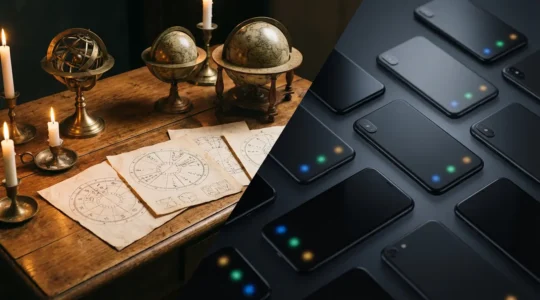
Transits vs. Horoscopes: Why Your Daily App Notification Might Be Misleading
Your daily horoscope app is likely giving you simplified, mass-market advice, not a precise forecast. The key is understanding that astrology operates on a data hierarchy, and most apps intentionally use low-resolution data for business reasons. Generic horoscopes are based…
Read more
How to Use Daily Horoscopes to Plan Your Morning Routine Effectively?
In summary: Instead of passively reacting to your horoscope, actively use it as a cognitive tool to strategically frame your professional day. Translate abstract astrological advice (e.g., “Mars energy”) into concrete corporate actions (e.g., “Schedule competitive negotiations”). Use “negative” forecasts…
Read more